
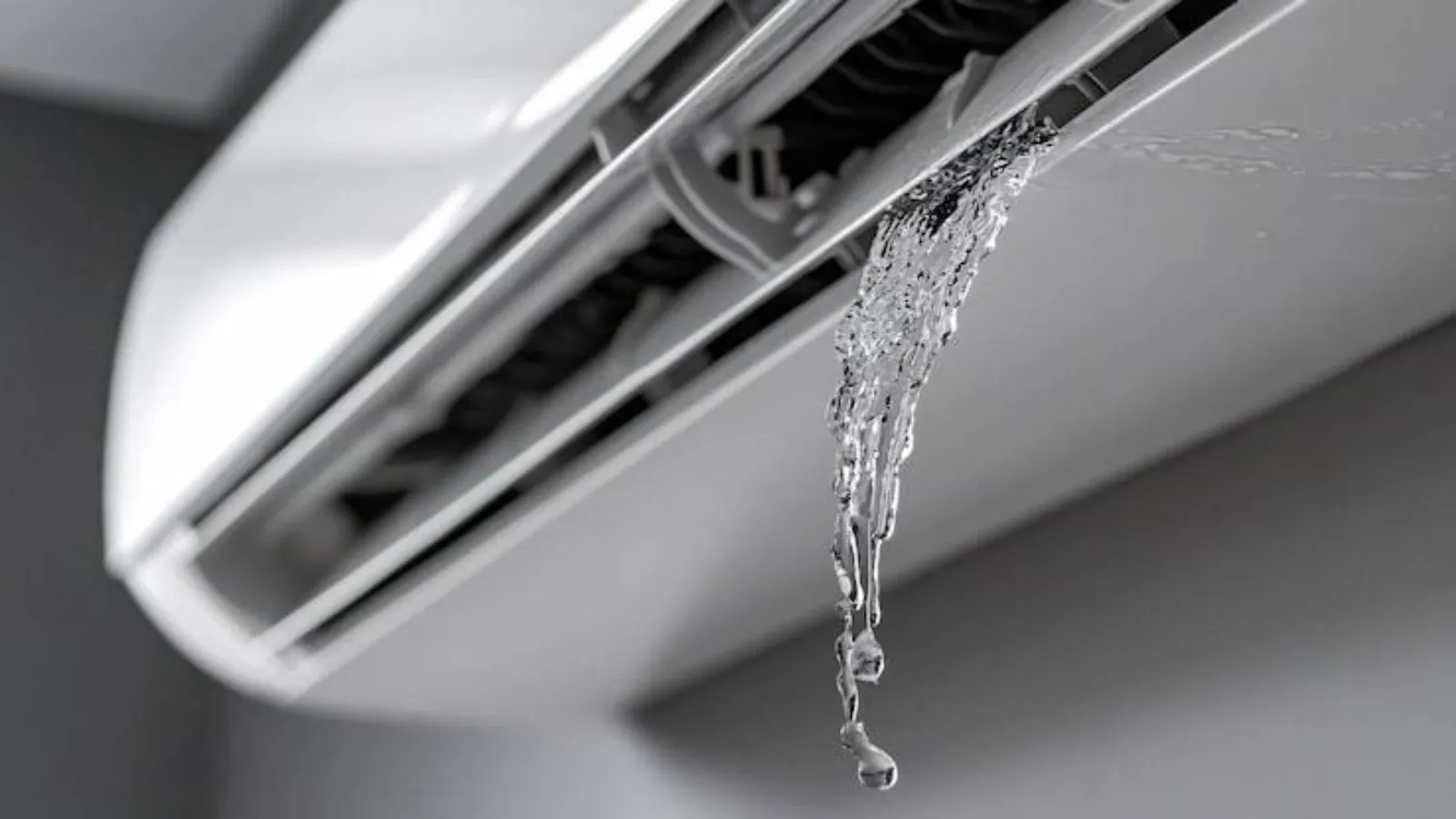
Why Air Conditioners Leak Water Into the House
Cooling a humid house pulls many gallons of water out of the air each day, and a pipe called the condensate line carries it outside. When that line clogs with algae and sludge, the pan under the air handler fills and spills into the ceiling, the closet floor or the attic insulation.
Georgia summers keep systems running for months, so a partial clog can build slowly. The leak often shows first as a stain on a hallway ceiling or a damp spot at the base of a closet wall.
Turn the system off first
Switch the thermostat to off and cut power at the air handler to stop more condensate from forming. Running a system with a full pan only adds water.
If the ceiling is bowing, keep clear and place a bucket under it.
How We Dry an AC Leak
Air handlers in attics soak insulation and the ceiling beneath, while closet units send water along the floor into carpet and walls. The drying plan depends on where the unit sits and how long the leak ran. A thermal camera shows the wet area, and moisture readings confirm which materials can stay.
We remove wet insulation, open the ceiling if the board is soft, and dry the cavity with air movers. Your HVAC technician clears the line and checks the pan switch, which is the part that should have stopped the system.
Shut down and drain
Stop the system and drain the pan so the leak does not continue.
Find the wet area
Imaging and meters show how far the water traveled.
Remove and dry
Wet insulation and soft drywall come out, and the cavity is dried.
Hand back for repair
Once dry readings hold, the repair scope for the ceiling is ready.
Air handler dripping into the ceiling?
Switch the system off and call us to start drying.
What Changes the Cost of AC Leak Cleanup
Slow leaks cost more to dry than a single overflow, because the wet area is wider.
| Factor | Why it matters |
|---|---|
| Where the unit sits. | Attic units wet insulation and ceilings, while closet units wet the floor and wall base. |
| Duration of the leak. | Weeks of dripping soak deeper than one overflow. |
| Insulation condition. | Wet blown-in insulation clumps and is usually replaced. |
| Ceiling damage. | A soft or stained ceiling is cut out and patched. |
| Repeat clogs. | If the line clogs again, the source must be fixed to avoid a second loss. |
What to Do Before the Technician Arrives
- Switch the thermostat to off and cut power at the air handler.
- Place a bucket under any drip and keep clear of a bowing ceiling.
- Do not run the system until the line is cleared.
- Photograph the stain and the pan.
Drying Guidance We Follow
Published ANSI/IICRC S500 practice calls for finding the wet path, removing materials that cannot dry and verifying readings. EPA guidance to dry within 24 to 48 hours is the reason an attic or ceiling leak should not be left for the weekend.
Insurance and AC Leaks
Policies often handle a sudden overflow differently from a slow leak that went on for months. Keep photos, the service invoice that cleared the line and any notes from the technician. Ask your carrier about the water damage and the HVAC repair separately, since they may fall under different parts of the policy.
AC Leaks in a Humid Southern Climate
Humid summers run air conditioning for long stretches, so the condensate line stays wet and algae builds faster than in drier climates. A yearly flush of the line and a working float switch are the two cheap parts that prevent most overflows.
When the leak is above a finished ceiling, dry readings matter more than appearance. A ceiling that looks fine can still hold moisture in the insulation above it.
Related Services
If the stain sits on a ceiling, read ceiling water damage repair. Wet walls near the closet are covered under wall and drywall water damage repair, and standing water in a closet needs water extraction.
AC Leak Questions From Douglasville Homeowners
The condensate line is likely clogged or the drain pan is cracked. The water then overflows into the ceiling or floor below the unit.
A shop vacuum on the outside end can clear a simple clog. If the pan switch failed or the leak is wide, call an HVAC technician as well.
Often yes, if it was soaked. Readings tell us where it can stay.
Wet insulation and drywall that stay damp for more than a day or two can grow mold. Drying quickly lowers the risk.