
A Failed Water Heater Floods the Floor in Minutes
A split tank or a failed drain valve can release 40 to 50 gallons at once. More follows if the cold supply keeps feeding it. In a closet or interior utility room, water runs under walls into hallways and carpet.
The immediate fix is to cut the inflow. Then the crew extracts water, checks adjacent rooms and dries the walls and floor around the unit.
Do this before you call
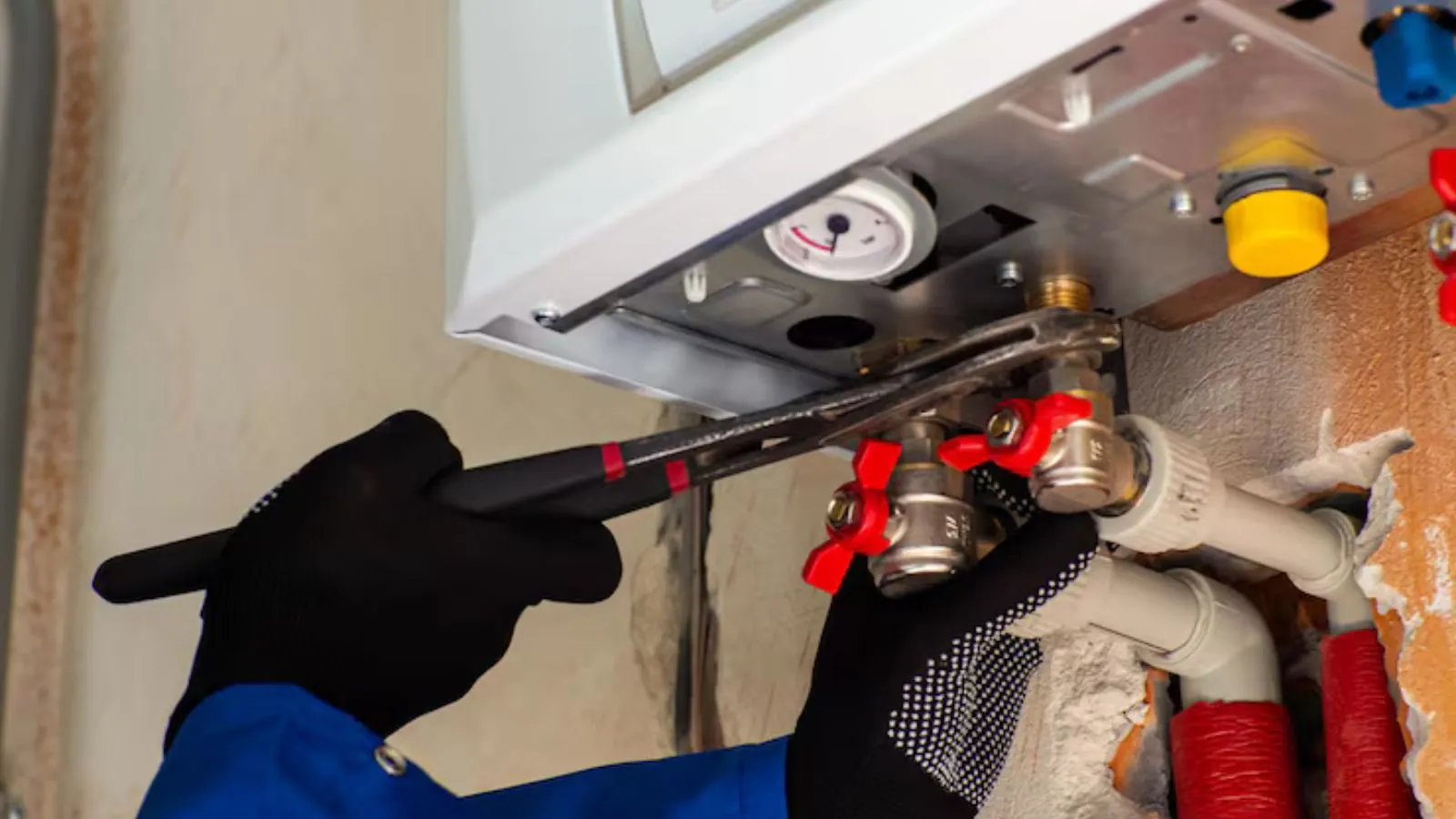
Close the cold water supply valve on top of the heater. For an electric unit, turn off the dedicated breaker only if the panel is dry. For gas, turn the control to off and leave the area if you smell gas.
Do not touch the tank or wiring while standing in water.
Where Water Heater Water Ends Up
Heaters sit in garages, attics, closets and basements, and each location sends water somewhere different. A garage slab usually drains toward a door, while a closet unit pushes water through the wall plates into carpet. Attic units are the worst because the leak soaks insulation and the ceiling below.
Hot water also releases heat and humidity into the room, which slows drying if the area is closed up. We open the space, extract, and place air movers and dehumidifiers to bring readings down.
Puddle at the base of the tank
A slow weep from a fitting or a failing tank. Close the supply and call before it worsens.
Rust-colored water or stains
The tank may be corroding from inside, which often ends in a split.
Warped flooring nearby
Water has been spreading for a while. Check the wall base too.
Sound of dripping from the closet
Look for an overflow line or a failed pressure relief valve.
Tank failed and water spreading?
Close the supply, then call to start extraction.
What Changes the Cost of Water Heater Leak Cleanup
The tank is only half the story. These factors set the scope for the surrounding area.
| Factor | Why it matters |
|---|---|
| Location of the heater. | Attic and second-floor units wet two levels. Garage units usually wet one. |
| Water volume released. | A slow drip and a full tank rupture are different jobs. |
| Adjacent finishes. | Carpet, wood and laminate each dry differently, and wall base may need pulling. |
| Drain access. | Floor drains help in a garage, while a closet has none and holds water on the floor. |
| Equipment access. | Tight closets limit where air movers can sit. |
Reference Standard for the Dry-Out
We use ANSI/IICRC S500 as the published reference for water loss work. For a tank failure it supports the same order of work every time, which is extraction, readings, targeted removal and measured drying.
Insurance and Water Heater Failures
Sudden tank failures are usually treated as accidental water damage, while a slow leak that went unnoticed for weeks can be treated differently. Save the failed unit if possible and photograph the label, the area and the damage. Ask your carrier about coverage for the water damage and for the tank itself, which is often handled separately.
Water Heaters in Douglasville Homes
Tank corrosion happens from the inside, so a heater can look fine until it splits. The practical check is the age sticker on the unit and the condition of the anode rod, since an older tank is a candidate for planned replacement rather than emergency cleanup. Ask your plumber about both the next time they are in the house.
If the heater fed a leak that ran for hours, the Douglasville-Douglas County Water and Sewer Authority has an Application for Leak Billing Adjustment. Ask whether it applies to your account once the cause is documented.
Related Services
If the pipe feeding the heater split, see burst pipe water damage. Appliance leaks inside the house follow similar steps in appliance leak water damage, and standing water is removed with water extraction.
Homeowners in newer subdivisions such as Anneewakee Trails often start with a failed water heater, and that page explains what the first hour looks like there.
Water Heater Leak Questions From Douglasville Homeowners
Yes. Tanks fail at any hour, so the line is staffed 24/7. Call (943) 469-0138 after closing the cold supply valve.
Moisture left in drywall, insulation or carpet can allow mold growth if it stays wet for more than a day or two. Prompt drying reduces that risk.
Close the supply first. A plumber can replace the unit while we dry the area, and the two jobs often overlap.
Hot water adds heat and humidity, which can soften adhesives and slow drying in a closed room.
Concrete usually dries in place. Stored cardboard and drywall near the unit are the items most often lost.