
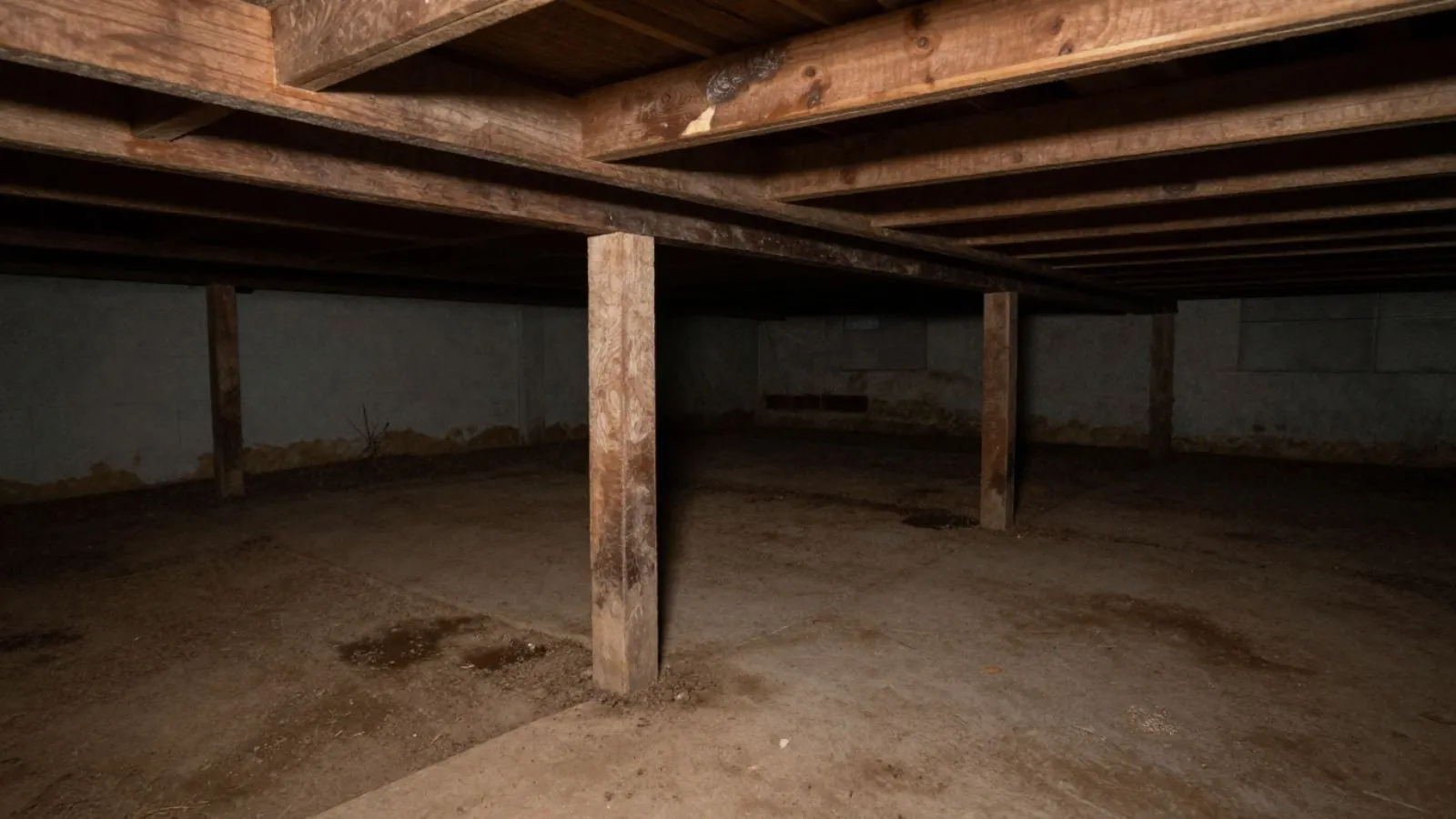
What Water Does Under the House
A crawl space is a small, closed environment, so water stays long after rain stops. Wet soil raises humidity, which soaks floor joists, subfloor and insulation. Over time, the moisture rises into the living space as cupped hardwood, musty odors and soft spots.
We start by finding where the water enters. Plumbing leaks, clogged downspouts, poor grading and groundwater after a long storm all send water under the house.
How We Dry a Crawl Space
Crews enter in protective gear, pump standing water and remove wet insulation that has fallen or soaked through. Moisture readings on joists and subfloor tell us how deep the damage goes, and fans and dehumidifiers bring the space back to dry readings.
A damaged vapor barrier is documented, since a torn or missing one lets ground moisture rise again. We note what your contractor should fix, such as grading and gutters, so the same problem does not return.
Find the source
We check plumbing, downspouts and grading to see how water got in.
Pump and remove
Standing water and soaked insulation come out first.
Dry the structure
Air movers and dehumidifiers bring joists and subfloor down to dry readings.
Document the barrier
Torn vapor barrier and drainage issues are recorded for the repair.
Water under the house?
Call to schedule pump-out and drying.
What Changes the Cost of Crawl Space Water Damage
Access and depth dominate this kind of job. Here is what shapes the scope.
| Factor | Why it matters |
|---|---|
| Height and access. | Low clearance slows work and limits equipment size. |
| Depth of water. | Standing water needs pumps, while damp soil needs only air and dehumidification. |
| Insulation type. | Batt insulation under the floor may fall once wet and require replacement. |
| Source of water. | A plumbing leak is simpler to fix than recurring groundwater. |
| Vapor barrier condition. | A torn barrier lets moisture return and may need repair. |
Signs a Crawl Space Problem Has Reached the House
You rarely see the crawl space, so the clues show up inside the house. Cupped hardwood, doors that stick, a musty smell in closets and floors that feel springy near exterior walls all point to moisture under the home.
Outside, look for downspouts that empty beside the foundation, soil that slopes toward the house and vents that are covered with debris. Fix those first, because drying a space that keeps taking in water only buys a short break.
- Cupped or buckled flooring above the crawl space.
- A damp, earthy smell that gets stronger after rain.
- Sagging insulation or a torn vapor barrier visible through the access door.
What to Do Before You Enter the Crawl Space
- Do not enter if water is deep or wiring is exposed.
- Close the main if a pipe is leaking.
- Photograph the access door view and any standing water.
- Check gutters and downspouts outside for the source.
Reference Guidance for Crawl Space Drying
ANSI/IICRC S500 and EPA moisture guidance both point to the same priorities for a wet crawl space, which are removing standing water, drying wood within 24 to 48 hours and fixing the source of moisture.
Insurance and Crawl Space Water
Water from a burst pipe under the house is typically treated as accidental water damage, while groundwater rising from outside may not be covered by a standard homeowners policy. Photograph the space and the source before cleanup, and ask your carrier how it classifies the cause.
Crawl Spaces and Douglas County Soil and Storms
Douglas County sits in two mapped floodplains, according to its flood brochure, with Sweetwater Creek to the north and east and the Chattahoochee to the southeast. If your lot drains toward those areas, a long storm can raise groundwater under the house, so check the crawl space after heavy rain.
In September 2009, 21.03 inches of rain fell in 24 hours at the Douglasville-Douglas County Water and Sewer Authority, according to the National Weather Service. Rain at that level shows how quickly ground can saturate, which is why gutters, downspout extensions and grading deserve a look before the next storm.
Related Services
Moisture under the house often continues in structural drying and dehumidification. If standing water filled the lower level, see basement water damage cleanup, and for storm intrusion, storm water damage cleanup.
Crawl Space Questions From Douglasville Homeowners
Standing water is. Damp soil with no standing water can wait for a scheduled visit, but moisture left in the space can damage joists over time.
We document the barrier condition and drying needs. A contractor installs barriers and drainage.
Wet batts sag and hold moisture, so they are usually replaced. Readings guide the decision.
Moisture and odors from below can rise through gaps in the floor, so drying the space helps the rooms above.