
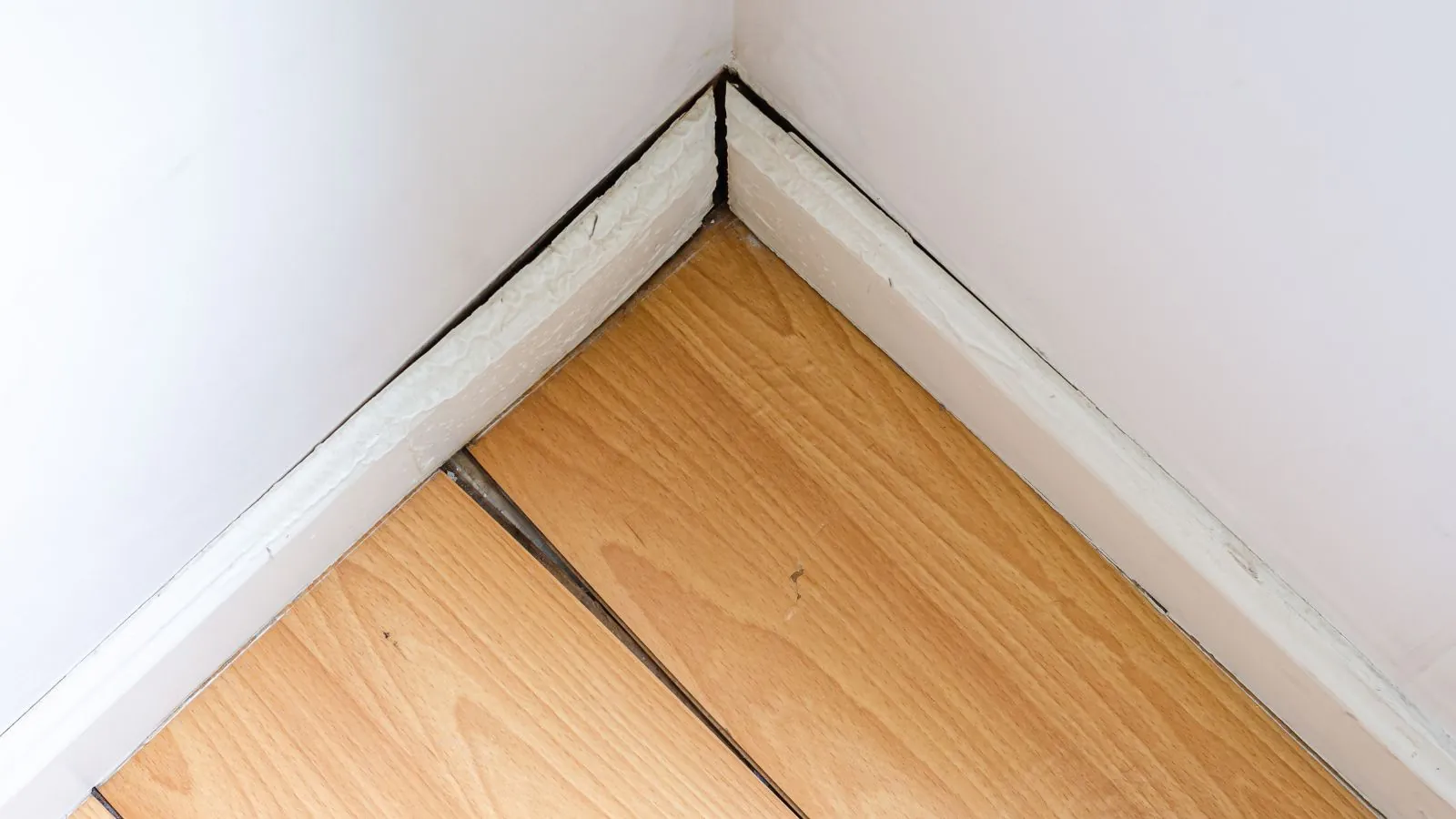
What Water Does to a Hardwood Floor
Wood takes on water through its edges and underside, then swells. The boards cup as the bottom expands faster than the top, and in severe cases they buckle off the subfloor. The longer wet boards stay wet, the more the damage sets in.
Finish does not make a floor waterproof. Water gets in through seams and edges, and it can sit between the boards and the subfloor where you cannot see it.
How We Dry Hardwood in Place
We begin with moisture readings across the floor and at the subfloor, then use a floor drying system that pulls moisture from the boards through the top and sides. Some boards are removed at the edges to open an air path, and mats or panels are placed on the surface to speed drying.
A floor that has cupped can flatten as it dries, so refinishing is often delayed until readings are stable. If boards have buckled or the subfloor stays wet, replacement of sections is the plan.
Measure
Readings map wet boards and the subfloor beneath them.
Open the path
A few boards at the edge are lifted or drilled so air can move under the floor.
Dry with controlled heat
Mats or panels and dehumidifiers pull moisture out slowly to avoid splitting.
Wait and decide
Once readings stabilize, we decide what needs sanding, refinishing or replacement.
Hardwood floor wet?
Call now. Early drying decides how much can be saved.
What Changes the Cost of Hardwood Floor Repair
Drying a floor costs less than replacing one, and speed is the biggest factor.
| Factor | Why it matters |
|---|---|
| Hours since the leak. | Floors dried within a day or two have the best chance of recovery. |
| Wood type and thickness. | Solid planks tolerate drying better than thin engineered boards. |
| Subfloor type. | A plywood subfloor dries faster than a concrete slab. |
| Finish and installation. | Glued floors are harder to lift than nailed floors. |
| Area affected. | Larger areas need more drying equipment and time. |
What to Do in the First Hours
Remove standing water from the surface with towels or a wet vacuum, and move rugs, furniture and plants off the wet boards. Furniture legs leave stains in wet wood, so lift them or place foil under them.
Do not seal the floor with a plastic sheet, because trapped moisture makes cupping worse. Keep the air conditioning on, leave heat sources off and avoid sanding or refinishing until readings are stable.
Take photos of the cupping, the finish and the source of the water. If the leak came from an appliance or supply line, keep the failed part for the adjuster.
Standards for Wood Floor Drying
Published ANSI/IICRC S500 practice supports drying wood in place with controlled heat and airflow, measured against a dry reference. Wood species and finish change the target, so readings from an unaffected area of the same floor set the goal.
Insurance and Hardwood Floors
Water from sudden leaks is often covered, but cosmetic cupping that appears weeks later can be harder to link to the loss. Photograph the floor right away and keep the moisture readings. Your carrier decides how matching of undamaged sections is handled.
Hardwood Floors in Douglasville Homes
Many homes in the area sit on slab foundations or over crawl spaces, and each source of moisture is different. Floors over a crawl space take water from below and often show cupping first, while slab homes may have moisture rising through the concrete.
The Georgia Office of Commissioner of Insurance notes that overflowing washing machines and dishwashers are normally covered. Those two sources account for many floor losses, so keep the failed hose for the adjuster.
Related Services
Wet floors usually start with water extraction. For moisture beneath the floor, see structural drying, and for a leak under a slab, slab leak water damage.
Hardwood Floor Questions From Douglasville Homeowners
Often yes, if it is dried quickly. Cupping can ease as moisture drops, and sanding comes later.
Damage begins within hours, and floors left wet for several days are more likely to need replacement.
No. Pulling boards the wrong way can damage them. Call so we can open the floor with the right tools.
Only after readings are stable. Refinishing too early traps moisture.