
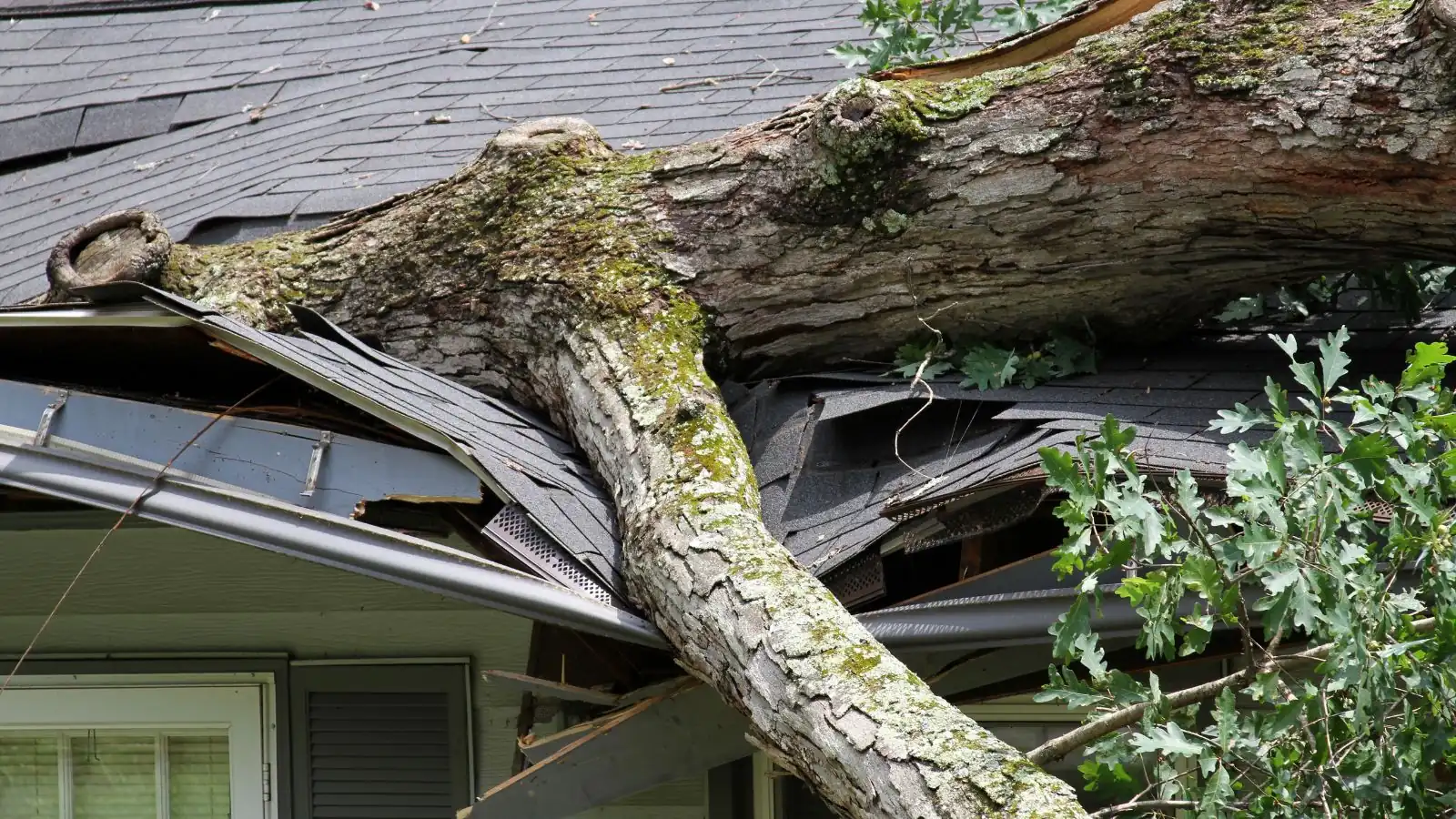
Storm Water Is Still Inside After the Rain Stops
A storm that blows rain through a damaged roof or window leaves water in insulation, ceilings and walls long after the sky clears. The wet areas are often above you, so the visible damage understates what is trapped behind the surface.
The first priority is to stop more water coming in. Cover damaged roofing with a tarp if you can do it safely, document the damage and call us for removal and drying while a roofer handles the repair.
After the storm
Stay off the roof and stay away from downed power lines. Water near outlets or fixtures means the circuit should be left alone until it is checked.
Photograph the damage before cover-up work and keep receipts for emergency repairs.
What Storm Water Damage Looks Like
Storm losses come in several forms. Roof leaks soak attic insulation and drip into ceilings, broken windows let rain onto flooring and sills, and heavy rain can push water under doors into low rooms.
We trace where the water went with a moisture meter and thermal camera, remove wet insulation and drywall, and dry the structure. Roof and window repairs are left to the roofer or contractor, and we coordinate timing so the interior is protected.
Ceiling stains after a storm
Water entered through the roof and is trapped above the drywall.
Wet window sills and floors
Rain passed through a failed seal or broken glass.
Damp attic insulation
A roof or vent opening is leaking and needs a tarp.
Water under a door
Heavy rain pushed water in, and the flooring is at risk.
Storm water inside?
Call now and describe where it entered.
What Changes the Cost of Storm Water Cleanup
Storm scopes depend on the entry point and the amount of rain.
| Factor | Why it matters |
|---|---|
| Entry point. | Roof leaks wet attics and ceilings, while window leaks wet flooring. |
| Time before cover. | Unprotected openings let more rain in. |
| Insulation and drywall. | Wet insulation usually comes out, and soft drywall is cut. |
| Floors affected. | Carpet and hardwood respond differently to rain. |
| Repeat storms. | More rain before repairs can add to the scope. |
How to Document Storm Damage Safely
Take wide photos from the ground first, then close photos of each stain, wet ceiling and damaged window. Time-stamped photos help show the sequence of events, and a short note of when the rain started and stopped is useful to your adjuster.
Save receipts for tarps, boards and other emergency measures. Keep damaged materials until the adjuster has seen them, unless they pose a hazard. Do not climb onto a wet roof to gather photos, since a drone photo or a roofer inspection is safer.
What to Do Before You Call
- Stay off the roof and away from downed lines.
- Tarp a damaged roof from a safe position and photograph it.
- Keep outlets near wet areas off.
- Save receipts for emergency measures.
Reference Standards for Storm Losses
Storm intrusion is dried to the published ANSI/IICRC S500 approach, with EPA guidance of 24 to 48 hours as the outer limit for wet materials. Georgia insurance guidance adds a first step, which is to tarp a damaged roof and photograph the damage.
Insurance for Storm Damage
Georgia insurance guidance says to cover a damaged roof with a tarp and document the damage with photos. Wind-driven rain through a damaged opening is typically handled differently from flood water entering at ground level. Ask your carrier which category your loss falls into.
Storms and Douglas County
Douglas County sits in two mapped floodplains, so a storm can bring both roof leaks and ground-level water. The county flood brochure places the north and east in the Sweetwater Creek floodplain and the southeast in the Chattahoochee floodplain, and the answer to which water caused the loss changes your coverage.
The National Weather Service recorded 21.03 inches of rain in 24 hours at the Douglasville-Douglas County Water and Sewer Authority in September 2009. That event is a reminder to check gutters, downspouts and attic insulation before storm season, not after.
Related Services
Roof-driven water often needs ceiling water damage repair. Ground-level flooding is covered in flood damage restoration, and wet lower rooms in basement water damage cleanup.
Storm Water Damage Questions From Douglasville Homeowners
Yes. Storms hit at night and on weekends, so the line is staffed 24/7. Call (943) 469-0138 and tell us where the water came in.
Only if you can do it safely from the ground or a stable surface. Otherwise call a roofer and document the damage.
Wet insulation usually comes out, and readings tell us what can stay.
Rain through a damaged roof is often covered, while water entering at ground level may not be. Your carrier decides.
Yes. We coordinate so the interior is protected and the roofer can finish.