
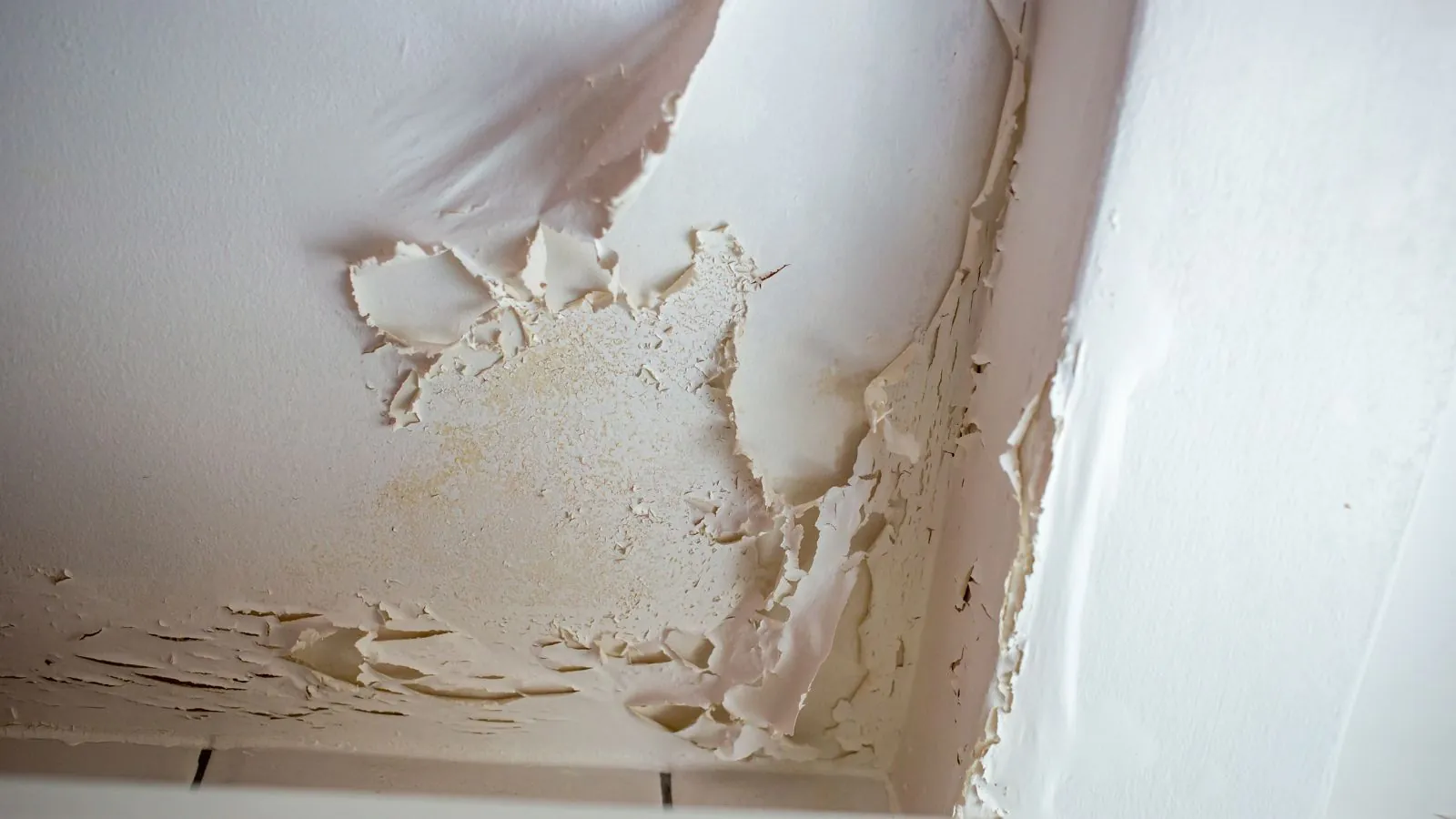
A Bulging Ceiling Can Drop Without Warning
Water collects on top of drywall until the board can no longer hold it. A brown ring or a small bubble is the visible edge of a much larger wet area, and a sagging section can release gallons at once. Stay clear of the area and move furniture out from under it.
The first step is relief. A crew makes a small controlled opening to let trapped water drain into a bucket, rather than letting the board fail across the room.
Do this before we arrive
Place a bucket under the lowest point and keep people out of the room if the ceiling is bowing. Turn off the light fixture at the switch if water is near it.
If the leak comes from a roof, cover the damaged section with a tarp from above if you can do it safely, and photograph the damage.
Finding Where the Water Came From
A ceiling stain is a symptom, not a source. The same brown ring can come from a roof penetration, an upstairs bathroom, a failing supply line or an air handler overflow. Water travels along joists and framing before it shows, so the stain is often several feet from the entry point.
A moisture meter and thermal camera trace the wet path. Once the source is stopped by a roofer or plumber, we dry the cavity, remove wet insulation and cut out drywall that will not recover.
Relieve the pressure
A small controlled opening lets pooled water drain safely so the ceiling does not fail.
Trace the path
Meters and a thermal camera show how far water traveled across the cavity.
Remove what is wet
Soaked insulation and drywall that is soft or stained through are cut out.
Dry and hand off
Air movers dry the cavity and joists, then the repair scope is ready for patching and paint.
Ceiling stained or sagging?
Call now and describe the stain. We plan the drainage and drying.
What Changes the Cost of Ceiling Water Damage Repair
Ceiling jobs vary with the source and the finish. These are the factors we ask about.
| Factor | Why it matters |
|---|---|
| Source of water. | A one-time roof leak is simpler than a recurring plumbing leak, since the cause may need a second visit. |
| Ceiling texture and finish. | Textured and popcorn ceilings are harder to match than flat ceilings. |
| Insulation type. | Blown-in insulation clumps when wet, while batts can sometimes be dried. |
| Area of drywall removed. | Larger cuts need more patching, taping and paint. |
| Floor above. | A bathroom or laundry above adds checks of subfloor and plumbing. |
The Published Practice Behind Ceiling Drying
ANSI/IICRC S500 describes how water travels through building materials and how to dry them in a controlled way. For ceilings, that means draining trapped water, removing wet insulation and checking readings before any patch or paint goes on.
Insurance and Ceiling Leaks
Georgia insurance guidance says to cover a damaged roof with a tarp and document the damage with photos. Policies often treat sudden roof or plumbing leaks differently from long-term seepage, so photograph the stain early and again as it spreads. Your adjuster makes the coverage call.
Ceiling and Roof Leaks in Douglasville
Georgia thunderstorms often arrive with wind-driven rain, and that rain exposes weak flashing around chimneys, vents and valleys. The practical step is to check the attic after a storm, because insulation that feels damp tells you the source is above and still active.
Older buildings near the Douglasville Commercial Historic District include structures from the 1880s, where original roof and parapet details can leak at joints. A flat or low-slope section is worth a roofer visit when stains return in the same spot.
Related Services
Roof-driven damage often overlaps with storm water damage cleanup. If water ran down inside a wall, see wall and drywall water damage repair, and if the source was a pipe, read about burst pipe damage.
Ceiling Water Damage Questions From Douglasville Homeowners
Yes. Ceiling leaks often appear during storms at night, so the line is staffed 24/7. Call (943) 469-0138 and describe the bulge.
Only with a bucket in place and from the side, never standing under it. A controlled opening is safer than letting the board fail on its own.
Both when the roof is the source. The roofer stops the entry, and we handle drainage, drying and the interior repair.
A stain can bleed through if the cavity is still wet or if the source remains. We confirm dry readings before closing it up.
Usually, because it stays wet and slows drying. Readings tell us where it can stay.