
Water in the Basement Is Rising or Settling Into the Walls
Basements sit below grade, so water enters through floor cracks, wall joints, window wells and drains. Heavy rain, a failed sump pump or a plumbing leak can put inches on the floor within hours.
The immediate need is to remove the water and find the entry point. Wet drywall, insulation and stored items begin to absorb moisture right away.
Before you enter
Do not step into standing water if outlets, appliances or the panel are below the water line. Leave the breaker alone until it is safe.
Move valuables to higher ground, and photograph everything before you move it.
How We Clean and Dry a Basement
Crews pump standing water, then remove soaked carpet, pad and wet drywall. Finished basements often have insulation behind drywall, so we cut flood lines a few inches above the wet line and remove what is wet.
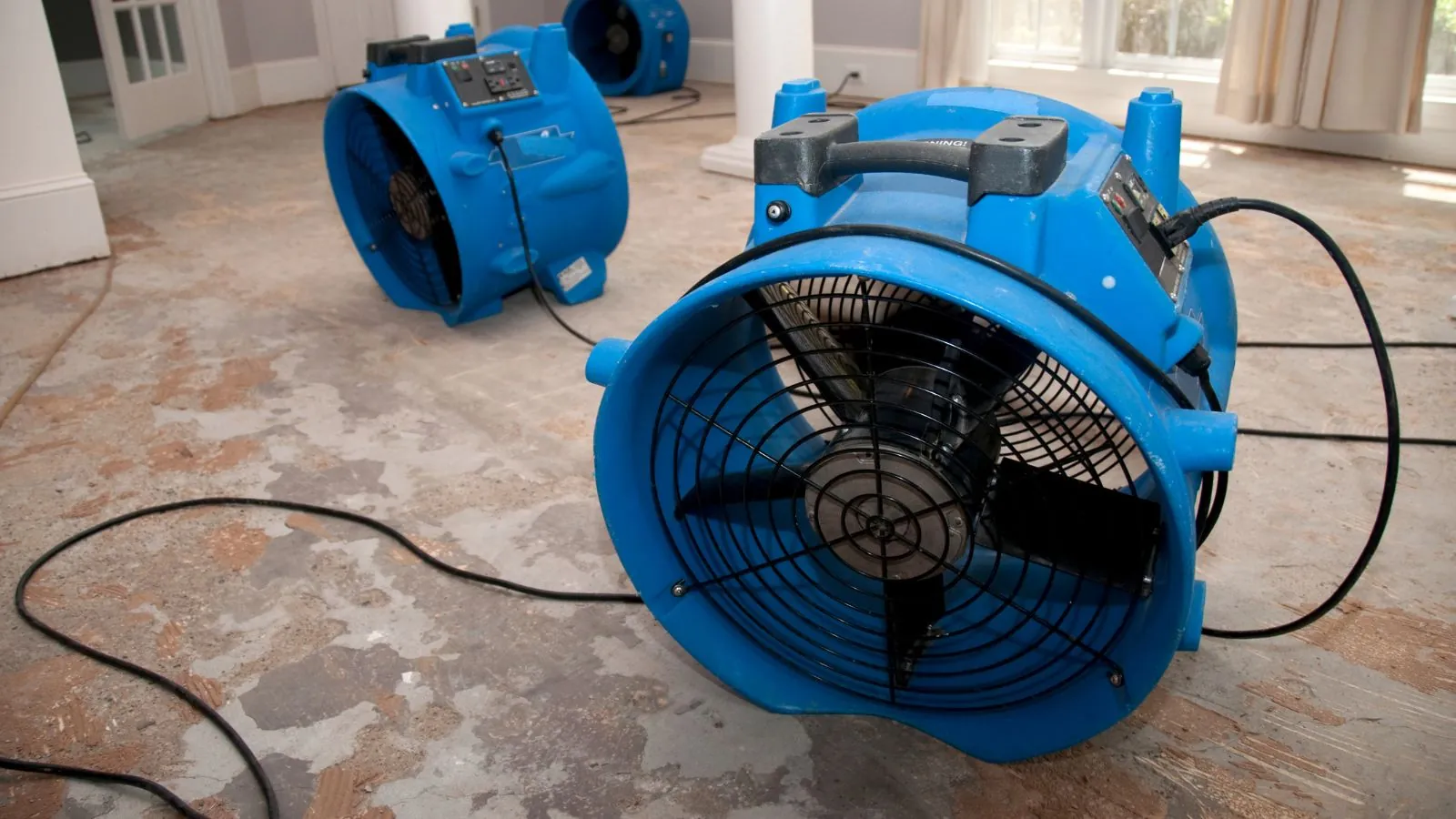
Concrete slabs hold moisture for days, so dehumidifiers and air movers run until readings fall. We also note the source, such as cracks, window wells or a sump problem, so a contractor can address it.
Pump out
Standing water is removed in stages.
Remove wet materials
Carpet, pad, insulation and wet drywall come out.
Dry the slab and walls
Dehumidifiers and air movers bring moisture down.
Document the source
Cracks, wells and sump issues are noted for repair.
Basement taking on water?
Call now and tell us the depth.
What Changes the Cost of Basement Water Cleanup
Finished basements cost more to clean than unfinished ones.
| Factor | Why it matters |
|---|---|
| Water depth. | Deeper water needs pumps and more time. |
| Finished or unfinished. | Drywall, carpet and trim add removal steps. |
| Water source. | Groundwater and sewage need different handling than a pipe leak. |
| Sump pump status. | A failed pump suggests the problem will recur. |
| Stored contents. | Boxes and furniture on the floor are often lost. |
Mistakes That Make a Wet Basement Worse
Running a household vacuum or space heater in standing water is the most dangerous one. Opening windows on a muggy day is a quieter mistake, because outdoor air can carry more moisture into the basement than it removes.
Stacking wet boxes against a wall, leaving carpet to dry in place and delaying the call until morning all add hours to the drying time. Pull stored items onto shelves or a dry floor, photograph them first and leave the carpet for the crew to extract.
- Do not enter the water if outlets or appliances are submerged.
- Do not run fans that blow wet air at finished walls.
- Do not throw out damaged items before photographing them for your insurer.
Insurance and Basements
A standard homeowners policy does not cover flood, and Georgia guidance notes that water seeping in from outside may not be covered. A pipe failure inside the house is treated differently. Ask your carrier about both, and about optional sump pump or water backup coverage.
Basements and the Douglas County Floodplains
The county flood brochure places the north and east of Douglas County in the Sweetwater Creek floodplain and the southeast in the Chattahoochee floodplain. If your home sits in or near those areas, basement water usually comes from the ground, which affects what insurance may cover.
In September 2009, 21.03 inches of rain fell in 24 hours at the Douglasville-Douglas County Water and Sewer Authority, according to the National Weather Service. A sump pump with a battery backup is one of the few measures that protects a basement during a long storm.
Related Services
Flooding from outside is covered in flood damage restoration. See carpet water damage restoration for lower-level carpet, and structural drying for concrete and walls.
Basement Water Questions From Douglasville Homeowners
Yes. Basements often flood during overnight storms, so the line is staffed 24/7. Call (943) 469-0138 and tell us how deep the water is.
Standing water is. It can spread into walls and damage stored items quickly.
Wet drywall is usually cut a few inches above the wet line and replaced.
Flood is not covered by a standard policy. Plumbing leaks inside the house are treated differently.
Check gutters, grading, window wells and the sump pump, and consider a backup power source for the pump.