
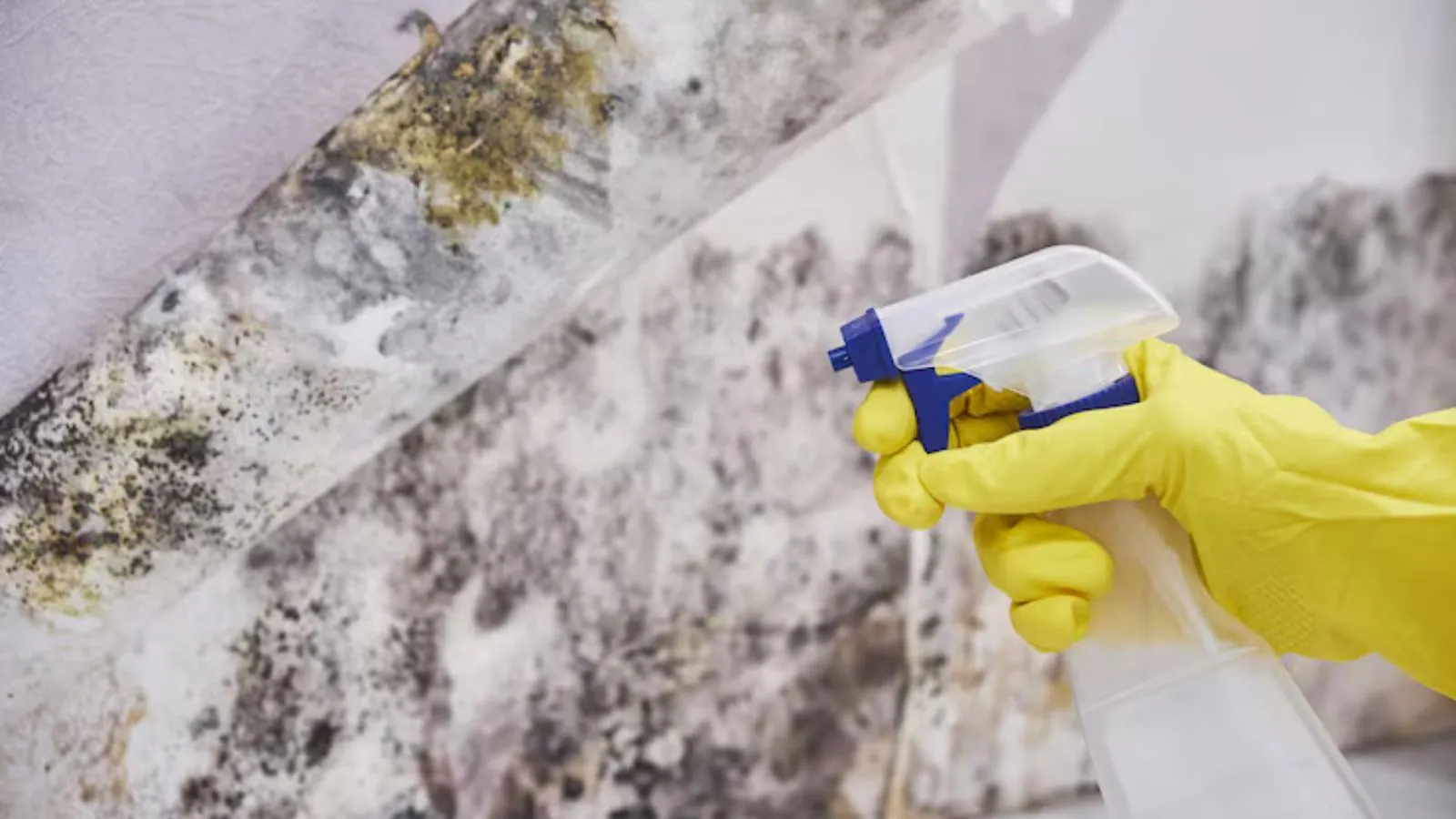
Why Is There a Musty Smell Where Water Once Leaked?
A musty smell near a past leak usually means materials stayed damp. Drywall, carpet pad and insulation that never dried can support mold growth, even when the surface looks normal.
The EPA says to dry wet materials within 24 to 48 hours to prevent mold. If that window passed, the remedy is to find the damp source, remove affected materials and dry the space.
How Mold Remediation Works
The process starts with finding the moisture source, because mold returns if the damp area remains. Crews set containment with plastic sheeting and negative air to keep spores from moving to other rooms, then remove affected drywall, carpet or trim.
Surfaces are cleaned with HEPA vacuums and wiped, and the area is dried to normal readings. Some projects use a third-party tester before and after, which gives an independent record. Ask whether your state licenses mold work, since rules differ by state.
Find the moisture
Meters and a thermal camera locate damp materials and the source.
Contain
Plastic barriers and air filtration protect the rest of the house.
Remove and clean
Affected materials are removed and surfaces are HEPA cleaned.
Dry and verify
The area is dried to normal readings before rebuilding.
Mold in the house?
Call to plan containment and removal.
What Changes the Cost of Mold Remediation
Size and location drive the scope.
| Factor | Why it matters |
|---|---|
| Affected area. | Larger areas need more containment and removal. |
| Material type. | Drywall and carpet are removed, while framing is cleaned. |
| Location. | Attics and crawl spaces add access challenges. |
| Moisture source. | An active leak must be fixed first. |
| Testing. | Third-party testing adds an independent record. |
What Not to Do When You Find Mold
Do not spray bleach over large areas, sand the surface or run a fan that blows across it. Those steps spread spores and push moisture deeper into drywall without removing the cause.
Do not paint over a stain either. Paint hides the problem for a few weeks and then the stain returns, because the damp material underneath is still there. Close the door to the room, turn off any fan that pulls air through the area and call for an assessment.
- Do not disturb a large area before containment is set.
- Do not cover mold with paint or caulk.
- Do not skip finding the moisture source, since growth returns without it.
How the Job Ends
Remediation ends when the affected materials are gone, the area is cleaned and the moisture readings are normal. Some owners hire an independent tester to take samples afterward, which gives a record separate from the remediation crew.
Rebuilding follows. New drywall, insulation and trim go in only after the structure is dry, and the moisture source is repaired first so the cycle does not repeat. Keep copies of the readings and photographs for your files.
Insurance and Mold
Many policies limit mold coverage unless it results from a covered water loss, so quick documentation after a leak matters. Photograph the area, keep moisture readings and note when the leak occurred. Ask your carrier how mold is handled in your policy.
Mold in a Humid Georgia Climate
Humid summers keep indoor air moist, so a damp wall cavity dries slowly without dehumidification. Running the air conditioning and using a dehumidifier in the affected area helps, but removal of wet materials is still the sure way to stop growth.
Older buildings in the Douglasville Commercial Historic District, which has structures from the 1880s, have plaster and heavy framing that hold moisture. Those materials need slower drying after a leak.
Related Services
Prevention starts with structural drying after any leak. For wet carpet, see carpet water damage restoration, and for wet walls, wall and drywall repair.
Mold Remediation Questions From Douglasville Homeowners
Moisture may be trapped in a wall, under carpet or in insulation. Moisture readings can find it even when the surface looks normal.
It can begin within 24 to 48 hours on wet materials, according to EPA guidance.
Small areas on hard surfaces can be cleaned, but larger areas need containment and removal.
Only if moisture remains. Fixing the source and drying the area prevents regrowth.
Not always. Testing gives an independent record and may be useful for claims or sale.