
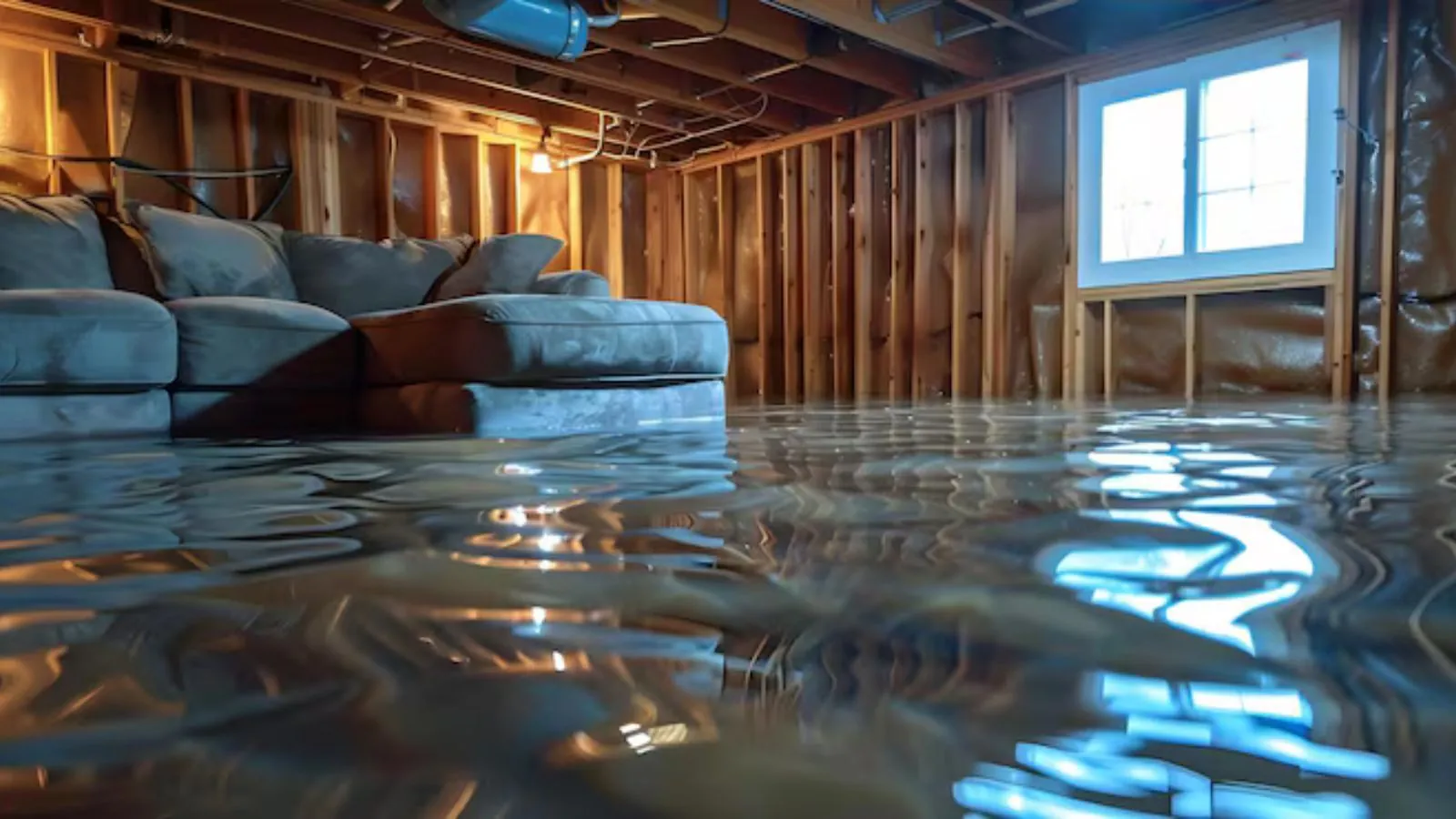
Flood Water Carries More Than Moisture
Water that enters from outside crosses lawns, driveways and storm drains before it reaches your floors. It can carry soil, fuel, bacteria and debris, so we treat it as contaminated until the cleanup is complete. That changes the protective gear, the disposal route and the materials we can save.
The result is a different job from a clean supply-line leak. Porous items such as carpet pad, insulation and soft furnishings are more often removed, and hard surfaces are cleaned and sanitized before drying begins.
Before you go back in
Do not wade through standing water until power to the area is confirmed off. Leave the electrical panel alone if you have to enter water to reach it.
Wear boots and gloves if you must enter, wash your hands afterward, and keep children and pets out of the rooms.
How Flood Cleanup Proceeds
Pump-out
Standing water is removed in stages so walls and slab are not stressed by sudden pressure changes.
Muck and debris removal
Silt, mud and loose debris come out before anything is dried, because they hold moisture against floors.
Removal of porous materials
Pad, wet insulation and soaked baseboard are taken out and bagged for disposal.
Clean, sanitize and dry
Hard surfaces are cleaned and treated, then air movers and dehumidifiers bring the structure to dry readings.
Documentation matters more here than in a small leak. We record the water line on walls, the rooms involved and the materials removed, which helps whoever is reviewing your claim and helps you decide what to replace.
Water coming in from outside?
Call now and describe the depth. We line up pumps and protective gear.
What Changes the Cost of Flood Cleanup
Flood scopes are wide, so the factors below shift the price more than in a typical leak.
| Factor | Why it matters |
|---|---|
| Depth reached on the walls. | The water line decides how much drywall and insulation must be removed. Water that rose a foot needs a flood cut at least that high. |
| Square footage affected. | More area means more extraction, more equipment and more drying days. |
| Silt and debris. | Mud must be removed by hand before sanitizing, which adds labor. |
| Floor and contents. | Carpet, pad and soft furnishings are more often discarded than saved. |
| Utilities and structure. | Water heaters, HVAC equipment and low outlets may need inspection by specialists before use. |
Insurance and Flood Damage
A standard homeowners policy does not cover flood. Georgia Office of Commissioner of Insurance guidance also notes that water seeping in from outside may not be covered. Federal flood coverage through the National Flood Insurance Program typically has a 30-day waiting period before it takes effect, so the time to ask is before the storm.
Flooding in Douglas County
Douglas County participates in the Community Rating System, and its flood brochure puts the northern and eastern parts of the county in the Sweetwater Creek floodplain and the southeast in the Chattahoochee floodplain. Ask the county whether your address is mapped before you buy a policy, since the answer drives your coverage options.
The September 2009 flood is the benchmark for local residents. The National Weather Service measured 21.03 inches of rain in 24 hours at the Douglasville-Douglas County Water and Sewer Authority, and the Dog River rose 12 feet over the USGS gage. Sweetwater Creek crested at 21.8 feet in 2005 and caused about $6 million in damage, according to the county.
After Flood Cleanup
Most flood jobs continue into structural drying and, in low rooms, basement cleanup. Storm-driven losses that come through the roof or windows are covered under storm water damage cleanup, and if sewage mixed with the floodwater, see sewage backup cleanup.
Flood Damage Questions From Douglasville Homeowners
Yes. Flooding often peaks overnight, so the line is staffed 24/7. Call (943) 469-0138 and give us the depth and the rooms involved.
It usually carries contamination, so the cleanup uses protective gear and sanitizing steps that a clean supply-line leak would not need.
Carpet and pad that sat in floodwater are most often removed. Hard surfaces and some solid furniture can be cleaned and dried.
A standard policy does not. Flood coverage is a separate policy, often through the National Flood Insurance Program with a 30-day waiting period.
Right away, once it is safe to enter. Wet materials left in place for more than 24 to 48 hours risk mold growth, according to EPA guidance.