
The decision to file is personal and depends on your policy. This guide lays out the questions to ask, not a rule. Your agent or carrier can answer the policy-specific parts.
Start With the Deductible
Compare the likely repair cost with your deductible. If the cost is clearly below the deductible, a claim pays nothing and may only add a record. If it is close or above, the claim may make sense.
Hidden damage changes the math. A small stain on a ceiling may hide wet insulation and a soft section of drywall, so get a moisture reading before you decide the loss is small.
Think About the Record
Insurers keep claim histories, and some policies or future applications ask about them. Ask your agent how a small claim might be treated in your case. Some owners choose to pay for a minor loss out of pocket and keep the claim for larger events.
Reporting is different from filing. Some policies require you to report a loss promptly even if you do not file, so read your policy and ask.
| Question | Points toward filing | Points toward paying yourself |
|---|---|---|
| Cost versus deductible. | Cost near or above the deductible. | Cost well below the deductible. |
| Hidden damage. | Wet walls or insulation. | Surface-only spill on a hard floor. |
| Source of water. | Sudden pipe or appliance failure. | Slow leak with no sudden event. |
| Policy rules. | Prompt reporting is required. | Policy allows a delay without penalty. |
| Future plans. | No plans to shop for coverage. | Planning to switch carriers soon. |
Documenting a Small Leak Even If You Do Not File
Take photos and write notes. Save the plumber invoice and the moisture readings. If the leak turns out to be larger, those records support a later claim and show you acted quickly.
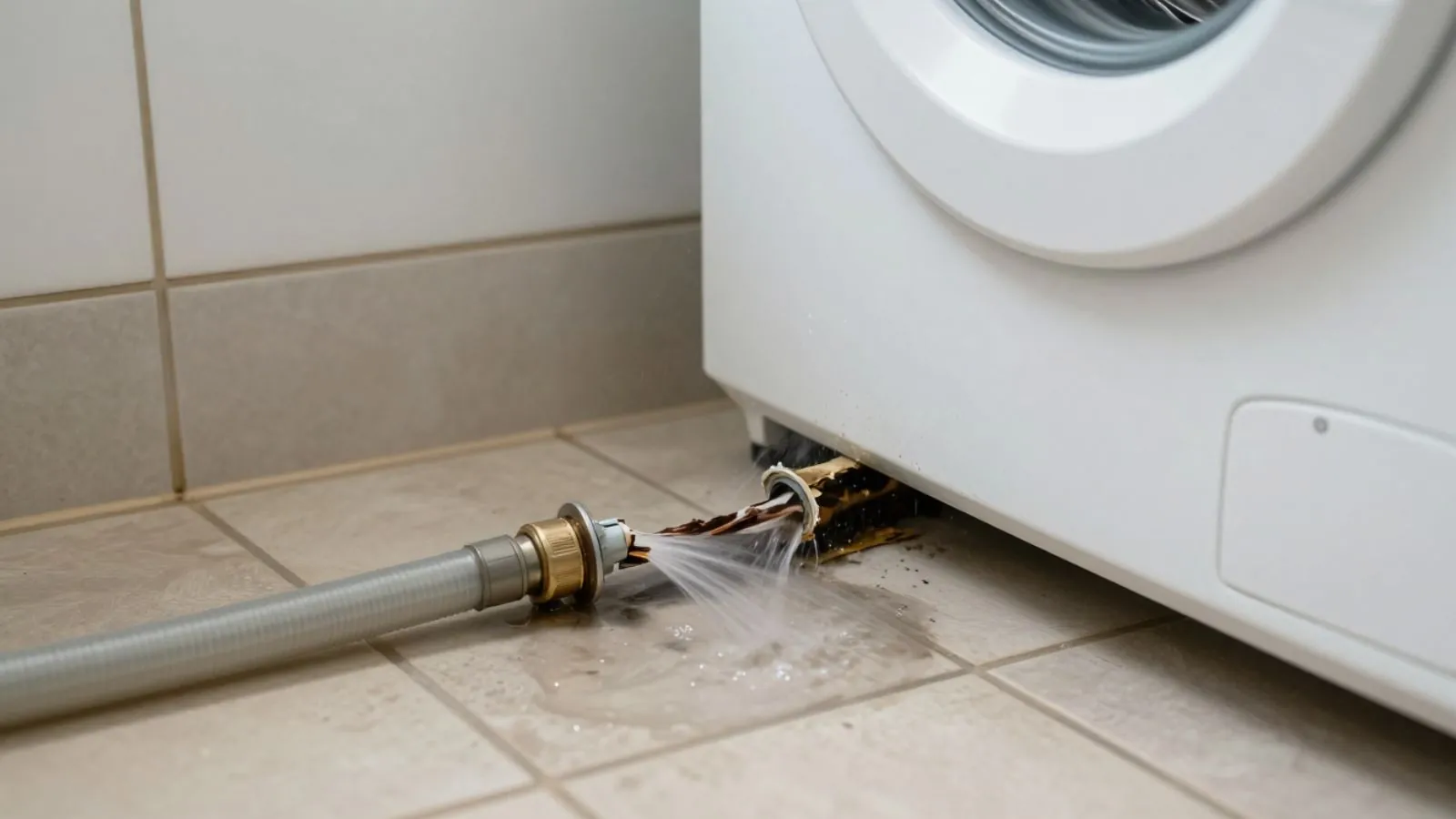
Georgia guidance says overflowing washing machines and dishwashers are normally covered, which matters for appliance leaks. For roof damage, cover the opening with a tarp and document it with photos.
Questions to Ask Your Agent
- What is my deductible for water damage?
- Do I need to report a loss I do not claim?
- How would a claim affect my renewal?
- Does the policy limit mold coverage?
Small Leak, Big Hidden Damage
A drip behind a toilet supply line can soak the subfloor for weeks. A refrigerator ice-maker leak can run under flooring and reach the next room. The visible damage is small, but the hidden damage is larger than it looks.
A moisture meter and a thermal camera show the true size. That reading is the best input for the decision about whether to file, because it replaces guessing with data.
What Happens If You Do Not File and It Gets Worse
If you pay for a small repair and the leak returns, the later claim can raise questions about prior damage. Keep records of the first repair, the readings and the invoices, so the timeline is clear.
Avoid patch repairs that hide the problem, such as painting over a stain. If the stain returns, the earlier repair becomes an argument for the insurer to say the loss was long-term.
Talking With Your Agent Without Filing
You can ask general questions about deductibles, reporting rules and renewals without naming a specific loss. Agents answer these often. Write down the answers and the date, and keep them with your policy.
A Simple Decision Path
- Stop the source and document the damage.
- Get a moisture reading to learn the true size of the loss.
- Compare the likely cost with your deductible.
- Call your agent with general questions about reporting rules.
- Decide whether to file, and write down the reason.
There is no single right answer. What matters is that the decision rests on readings and policy details, not on a hunch about how big the stain looks.
What an Adjuster Looks For
Adjusters look at the cause, the timing and whether you acted to limit the loss. A sudden failure that you stopped and dried quickly is easier to document than a stain of unknown age. Photos with dates and moisture readings tell that story in a few minutes.
The published ANSI/IICRC S500 standard describes the readings and records that show how a loss was handled, which is the evidence adjusters ask for.
Small Leaks in Douglasville Homes
Water bills can reveal small leaks. The Douglasville-Douglas County Water and Sewer Authority publishes an Application for Leak Billing Adjustment, which may help with the water bill after a leak is found and repaired, separate from any insurance claim.
After heavy storms, claims volume rises and adjusters get busy. A small loss may be easier to handle outside the claim process, while a larger one benefits from early reporting and strong documentation.
For help with drying a small leak, see ceiling water damage repair and appliance leak water damage. We serve Winston and Douglasville, and the service area page explains coverage.
Common Questions
It depends on the deductible, hidden damage and your policy. Get a moisture reading before deciding.
Some policies require prompt reporting. Check the policy or ask your agent.
It can, depending on the carrier and your history. Ask your agent how it applies to you.
Documentation from the start helps if you file later.
Georgia guidance says overflowing washing machines and dishwashers are normally covered.