
The smell you notice a few days after a leak is not the water. It is the result of materials that stayed wet long enough to grow microbes or break down. Air fresheners hide the smell for an afternoon. Drying the source removes it.
Where the Smell Usually Comes From
Odor sources hide in places that dry slowly. Carpet pad, the bottom of a wall, insulation in a ceiling cavity and the space under a vinyl floor can all hold water for weeks. A surface that looks and feels dry may still be wet two inches below.
Follow your nose and then confirm with a tool. The smell is strongest near the source, and a moisture meter reading in that area will be higher than in a dry reference spot on the same material.
| Where it smells | What may be wet | Typical fix |
|---|---|---|
| Near a baseboard. | Bottom of the drywall or the wall plate. | Dry the cavity or cut out a section. |
| On a carpeted floor. | Pad and tack strip. | Extract, lift the carpet and replace the pad. |
| In a closet. | Insulation or the wall behind it. | Open the wall and dry it. |
| Under a sink. | Cabinet base and subfloor. | Dry and replace swollen particleboard. |
| From a vent. | Condensate or duct moisture. | Have an HVAC technician inspect the line and pan. |
How to Find the Source Yourself
- Walk the area and note where the smell is strongest.
- Look for stains, bubbled paint, warped trim or soft spots.
- Press on drywall near the floor and feel for a cool, damp surface.
- Check inside cabinets, closets and behind furniture.
- If you own a moisture meter, take readings and compare with a dry wall.
If you cannot find it, a thermal camera and a pin meter can. Crews use them to follow the wet path behind finishes without opening every wall.
What Does Not Work
Candles, sprays and ozone machines treat the air but not the cause. Running a fan at the smell can spread it. Painting over a damp wall traps moisture and the odor returns when the paint fails.
The lasting fix is to remove wet materials that cannot dry, dry the structure and confirm readings. Cleaning comes after drying, not before it.
When the Smell Means Sewage
A sewage odor near drains or a basement floor drain points to a different problem. It can mean a dry trap, a cracked line or a backup. Stop using water, call a plumber and keep people out of areas where wastewater is present.
Drying Methods That Remove the Cause
Once the source is found, the plan depends on the material. Carpet pad that smells is replaced, because it cannot be cleaned deeply. Wet insulation is removed, and drywall that stayed damp for days is cut out above the wet line.
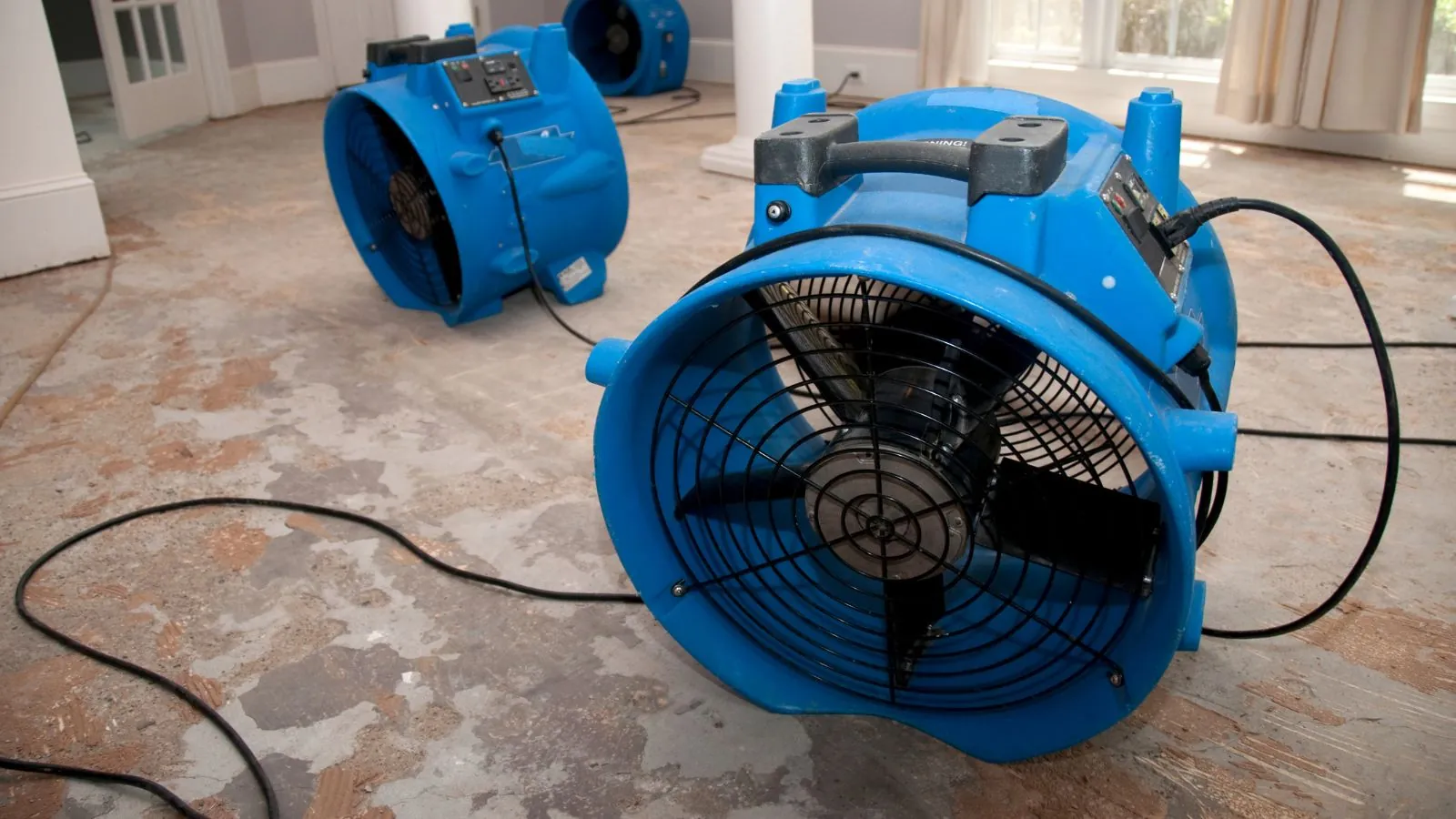
Hard framing and subfloor can be dried in place. Air movers push dry air across the surface, and dehumidifiers pull moisture out of the room. Readings tell the crew when to stop, and the smell fades as the readings drop.
How Long Until the Smell Goes Away
After wet materials are removed and the structure is dry, odors usually fade within days. If a smell lingers, a hidden source remains, such as moisture in a floor cavity or a small leak that is still active. Recheck readings and look for a slow plumbing or condensate problem.
Do not rebuild until readings are normal. New drywall or flooring on a damp structure can trap moisture and bring the smell back.
Renters and Shared Walls
In an apartment or townhome, the source may be next door or above. Report the smell to the landlord or property manager in writing. Include the date, the room and photos of any stains, and ask for an inspection of the wall or ceiling.
A last check helps. Wait a week after the work and walk through the area in the evening, when odors are easiest to notice. If the smell returns, take a moisture reading again, because a rebound often means a source was missed.
The published ANSI/IICRC S500 standard is the reference for finding and drying hidden moisture, and EPA guidance on drying within 24 to 48 hours explains why odors should not be masked.
Odors in Humid Georgia Homes
Georgia humidity slows drying, so odors can linger longer than they would in a drier state. Run the air conditioning and a dehumidifier in the area, and keep windows closed, since outdoor air can carry as much moisture as the air inside.
Older homes and the historic buildings near downtown Douglasville, which date to the 1880s in the oldest cases, often have plaster and wood framing that hold moisture. A damp smell there deserves a moisture reading before any cosmetic fix.
If the smell follows a leak, see structural drying or carpet water damage restoration. We serve Winston and Douglasville, and the service area page explains coverage.
Common Questions
Materials stayed damp long enough to break down or grow microbes. The smell stays until the material is dried or removed.
Rarely. If the source is still damp, the smell can return even after the surface looks dry.
It may reduce odor in the air but does not fix the source. Dry or remove the wet material.
Most losses take several days, depending on materials, humidity and the area affected.
Moisture left for more than 24 to 48 hours can allow mold growth, according to EPA guidance. Dry the area and remove materials that stayed wet.