
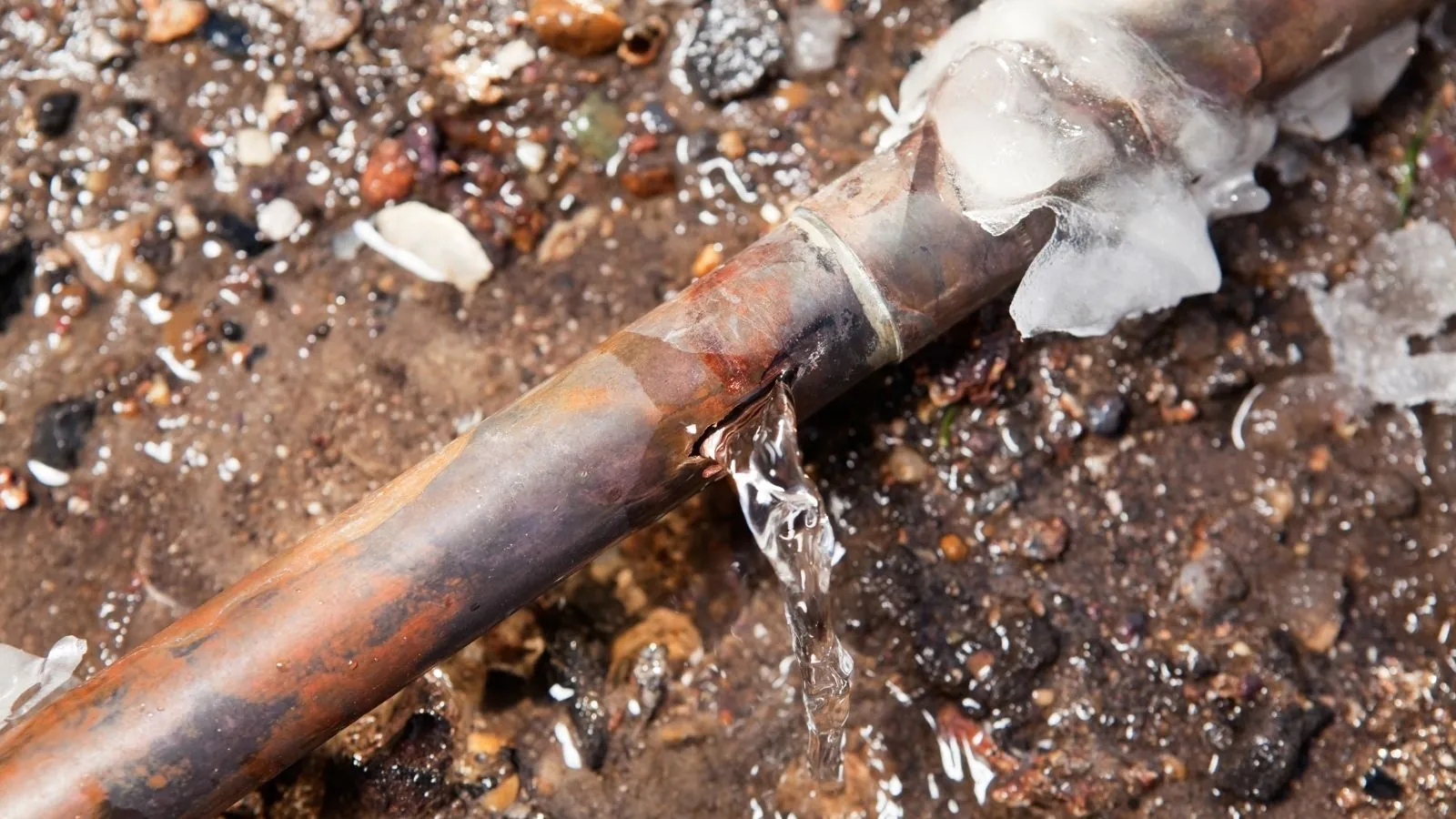
When a pipe bursts, the first thing to stop is the flow. A supply line under normal household pressure can release gallons every minute, and each minute adds damage. Most homeowners cannot find the shutoff under pressure, so locate it today.
Where the Main Shutoff Usually Is
Look where the water line enters the house. In many homes that is a basement wall, a utility room, a garage or near the water heater. Homes on a slab often have it in a closet or the garage. Outside, the meter box near the street has a valve too.
There may be two shutoffs. One is inside the house, and the other is at the meter, which is typically controlled by the water provider. Know which one you are allowed to operate.
Types of Valves
A gate valve has a round wheel that you turn clockwise to close. It can stick if it has not been used for years. A ball valve has a lever handle, and a quarter turn closes it. Lever valves are easier in an emergency.
If the valve is stiff, do not force it. A stuck valve can break and make the problem worse. Call a plumber to replace an old valve before it fails.
- Walk to the shutoff and turn it clockwise (gate) or a quarter turn (ball) until it stops.
- Open a low faucet to relieve pressure and drain the lines.
- Shut off the water heater power or gas if the heater might run dry.
- Take photos of the damage and the source.
- Call a plumber and a restoration crew.
Individual Fixture Shutoffs
Toilets, sinks, washing machines and dishwashers have small valves of their own. Closing a fixture valve stops a local leak without cutting water to the entire house. Test each valve once a year to make sure it still turns.
| Problem | Best shutoff | Notes |
|---|---|---|
| Burst pipe in a wall or ceiling. | Main shutoff. | Open a low faucet afterward to drain the lines. |
| Leaking toilet supply. | Valve behind the toilet. | Turn clockwise until it stops. |
| Washing machine hose. | Wall valves behind the washer. | Pull the machine out only when safe. |
| Water heater leak. | Cold supply valve on top of the tank. | Also cut power or gas. |
| Unknown source or severe flooding. | Main shutoff. | Call the water provider if the main will not close. |
What to Do After the Water Stops
Once the main is closed, open a low faucet and a high faucet to drain the lines. This relieves pressure and limits further leakage from the broken section. Shut off the water heater, because heating elements can burn out if the tank runs dry.
Then deal with the water on the floor. Move valuables, lift furniture off wet carpet and begin removing standing water if it is safe. Photograph everything before the cleanup, and write down the time you found the leak and the time you closed the valve.
Restoring Water Safely
After the plumber repairs the line, open the main slowly. Check every repaired joint and look for drips. Run faucets one at a time to clear air from the lines, and watch the meter to confirm there is no hidden loss.
Check ceilings and walls over the next day for new stains. A repaired pipe can still have wet insulation or drywall behind it, and moisture readings are the best way to confirm those areas are drying.
Practice Before You Need It
Turn the main off and on once a year so the valve does not seize. Show everyone in the household where it is, and make sure a house sitter knows too. Add a note on the valve with the direction to close, so no one has to guess in a panic.
Tools Worth Keeping Nearby
A pair of channel-lock pliers or an adjustable wrench helps with stiff valves. A flashlight stays near the shutoff, and a roll of plumber tape and a few rags help with a minor drip while you wait. Keep the plumber phone number written on the wall near the valve.
The Douglasville-Douglas County Water and Sewer Authority and your plumber decide how the meter and main are handled, and ANSI/IICRC S500 is the published reference for the drying that follows.
Water Service in Douglas County
Public water and sewer service for much of Douglas County comes through the Douglasville-Douglas County Water and Sewer Authority. If you cannot close the main or the meter valve is stuck, call the Authority and ask whether they can help. Do not tamper with the meter itself.
The Authority also publishes an Application for Leak Billing Adjustment. After a leak that ran for hours, ask whether it applies to your account and keep the plumber invoice that documents the repair.
After the water stops, see burst pipe water damage and water extraction. We serve Winston and Douglasville, and the service area page explains coverage.
Common Questions
Look where the line enters the house, often a basement, garage, closet or utility room. A meter box near the street has a valve too.
Do not force it. Close the meter valve if you can, or call the water provider and a plumber.
Many owners do, particularly for long trips. It limits damage from a hose or supply failure while you are away.
Open a faucet. If water stops flowing within a minute, the main is closed.
A plumber for the repair and a restoration crew for water removal and drying.