
Soft furniture holds water deep inside, where air does not reach. A wet mattress or sofa can look dry on top and stay damp for days. This guide helps you decide what to try and what to let go.
Start With the Water Source
Clean water from a supply line or a roof leak gives you the most options. Water from a drain, toilet or flood is contaminated, and soft furniture that touched it should be discarded. If you are not sure, treat the water as contaminated.
Note how long the item was wet. Items that dried within a day or two have a better chance than items that sat wet for several days.
Mattresses
Foam and innerspring mattresses hold water in layers. If the water was clean and you act within hours, you can blot the surface, stand the mattress on edge, and dry it with air movement and a dehumidifier. The inside may take days.
If a mattress stays damp in the center, develops a smell or shows stains from the inside, replacement is the safer choice. A mattress that has soaked through is hard to dry fully.
Sofas and Upholstery
Upholstered furniture has a wood or metal frame, foam cushions and fabric. Remove the cushions, lift the furniture off the floor and let air flow through. Fabric can be cleaned, but the foam holds water and can stay damp for a long time.
Solid wood frames often survive. Particleboard frames and furniture with glued joints can swell and loosen. Check the frame after drying for warping or loose joints.
| Item | Clean water, caught early | Contaminated water or long wet time |
|---|---|---|
| Foam mattress. | Blot, ventilate and dry, may be saved. | Discard. |
| Innerspring mattress. | Dry on edge, may be saved. | Discard. |
| Upholstered sofa. | Remove cushions and dry, foam may need replacement. | Discard. |
| Solid wood furniture. | Wipe, dry and inspect joints. | Clean and sanitize if possible. |
| Particleboard furniture. | Often swells, replacement likely. | Discard. |
Drying Steps That Help
- Move the item to a dry room with air flow.
- Blot the surface with towels, pressing, not rubbing.
- Raise the item off the floor on blocks or foil.
- Use a dehumidifier in the room and keep windows closed in humid weather.
- Check the center of the item with your hand or a moisture meter after a day.
Sunlight and fresh air can help, but a humid day outside can bring moisture back in. In Georgia summers, a closed room with a dehumidifier is often more effective than a porch.
Insurance and Contents
Contents claims typically need a list with item names, ages and approximate prices. Photograph each item before discarding it. If the item cannot be saved, keep the tag or label as proof.
Pillows, Cushions and Smaller Items
Pillows and loose cushions are easier to handle than a full mattress. Foam pieces can be pressed with towels and dried flat in a room with a dehumidifier. Down and polyester fill dries slowly and can clump, so wet items that stay damp after a day should be discarded.
Washable covers can go through a hot wash if the label allows. Dry them fully before putting them back, since a damp cover on a dry cushion brings the problem back.
Smells and Stains
A sour smell after drying means microbes took hold inside the padding. Baking soda and sunlight may take a light odor out of fabric, but a deep smell in foam is a sign to replace the item. Stains that return after cleaning come from moisture wicking up from inside.
Rather than keep an item that smells, weigh the cost of replacing it against the effort of repeated cleaning. For a mattress that is used every night, a persistent smell is a reason to replace.
Protecting Floors Under Wet Furniture
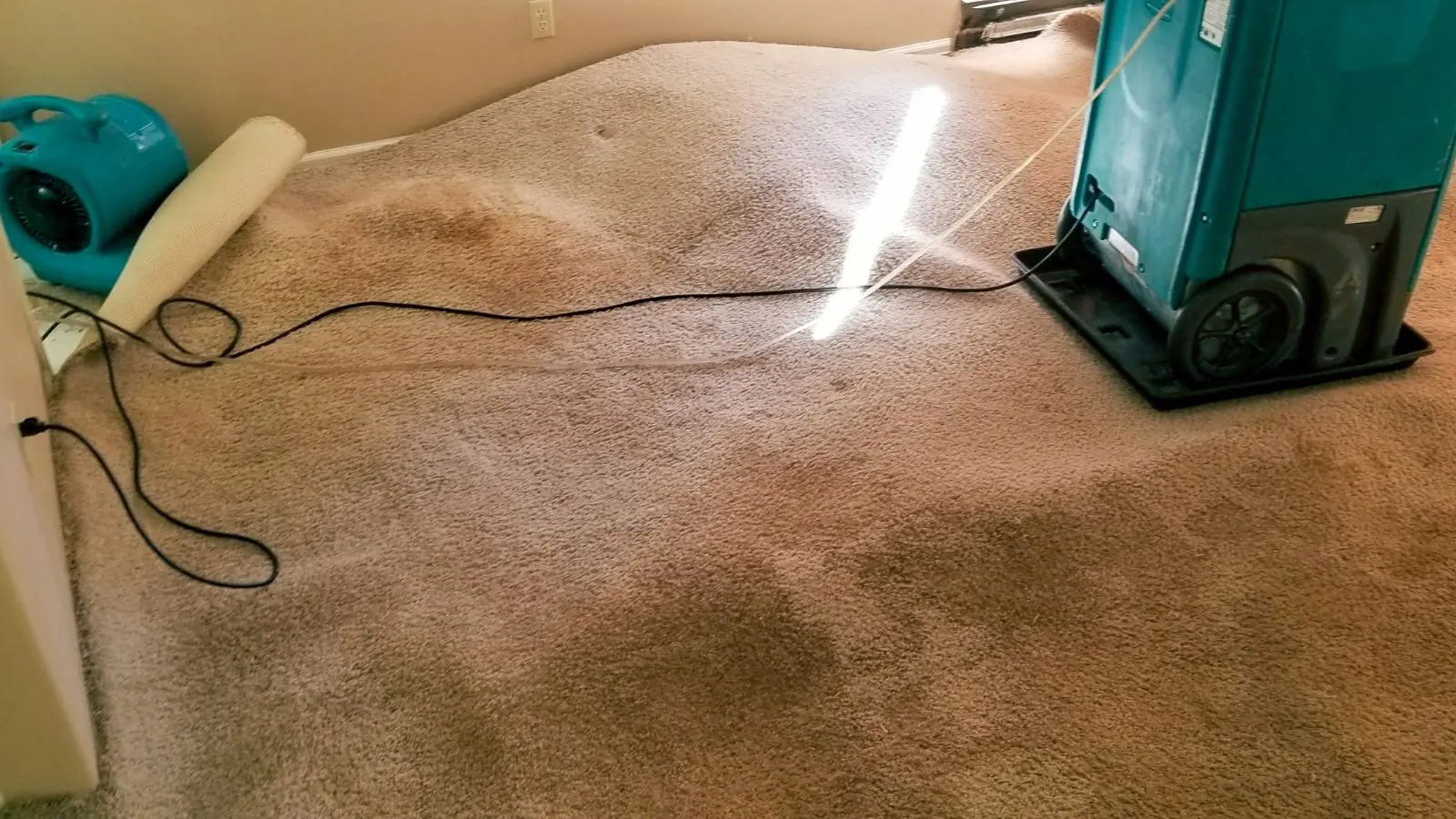
Wet furniture left on carpet or wood stains the surface below. Move it to a hard floor or lift it on foil blocks, and check the floor under it for moisture. Carpet that stayed under a wet sofa for a day needs the same drying as any other wet area.
What to Do Before You Handle Wet Furniture
- Check for electrical hazards before entering a wet room.
- Do not lift soaked items alone.
- Treat dirty water items as contaminated.
- Photograph items before discarding them.
The published ANSI/IICRC S500 standard separates clean water from contaminated water, and that distinction decides whether soft furniture can be dried or must be discarded.
Furniture and Humid Weather
Georgia humidity makes drying slow, so wet furniture can take much longer than the same item would in a drier state. A dehumidifier running in a closed room is more reliable than fans pointed at a humid porch.
If your furniture got wet in a basement or lower level near a mapped floodplain, treat the water as contaminated. Douglas County flood information places the north and east in the Sweetwater Creek floodplain and the southeast in the Chattahoochee floodplain.
If the leak also soaked floors or walls, see carpet water damage restoration and water extraction. We serve Winston and Douglasville, and the service area page explains coverage.
Common Questions
Sometimes, if the water was clean and you act within hours. The center can stay damp, so check after a day.
Not always. A mattress exposed to a small amount of clean water may recover, while a soaked one usually does not.
If the water was clean and the sofa dries within a day or two, it may be saved. If not, replacement is safer.
Contents coverage may apply to a covered water loss. Document each item and ask your carrier.
Press the center with your hand or use a moisture meter. A cool, damp feel means moisture remains.