
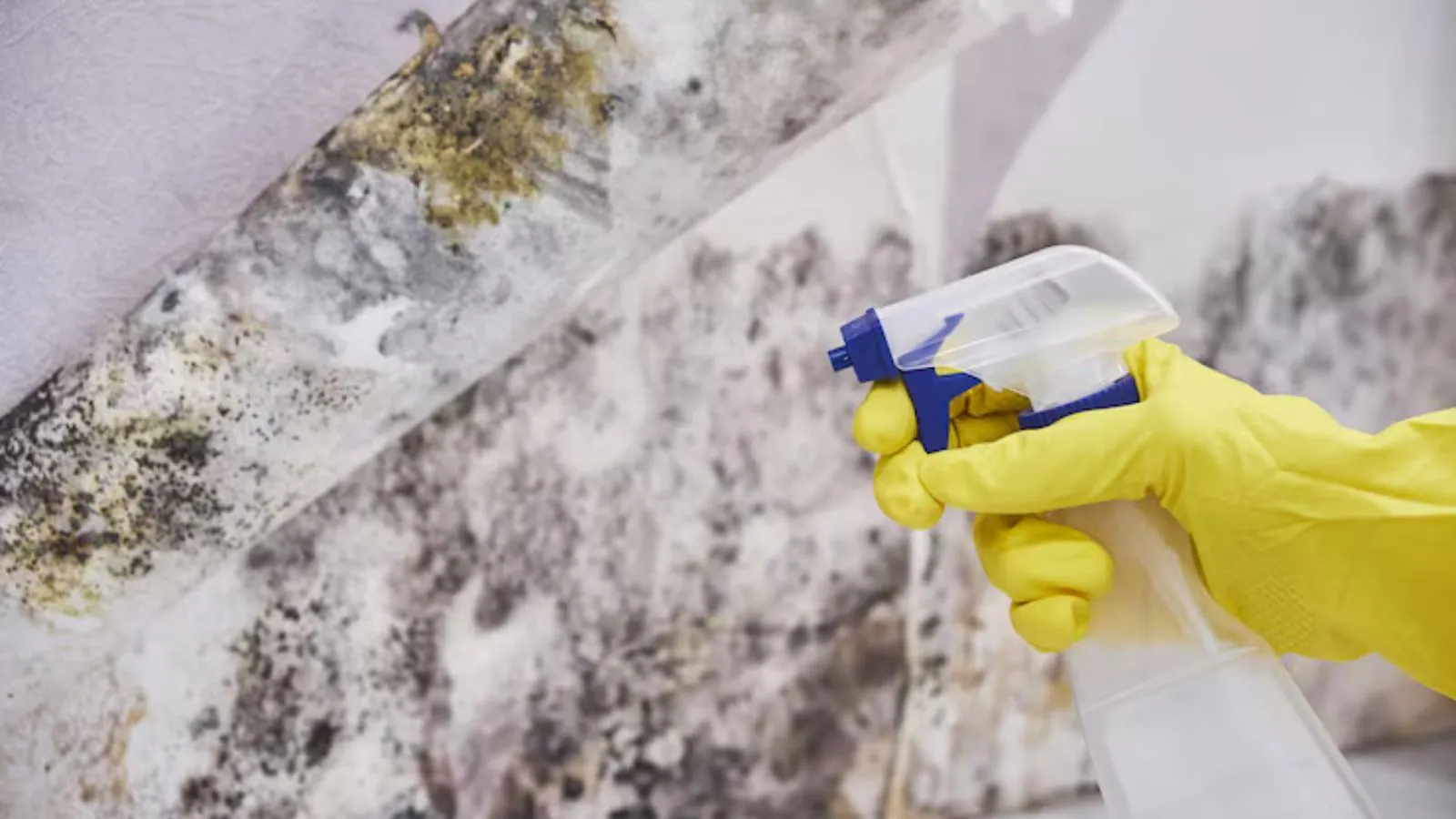
Searches for what kills mold usually lead to bleach, vinegar and sprays. Those can change how a surface looks. They do not change the moisture that let the mold grow, and they do not reach mold growing inside drywall or insulation.
Why Moisture Is the Real Problem
Mold needs moisture, a food source and time. Drywall paper, wood and carpet pad are food. The only part you can reliably control is moisture, which is why the EPA advice is to dry wet materials within 24 to 48 hours.
If a wall stays damp for weeks, a cleaning spray on the surface leaves the wet cavity in place. The mold returns, often within days, because the conditions never changed.
What Works
- Stop the water source and confirm it is stopped.
- Remove materials that stayed wet and cannot be cleaned, such as soaked drywall, carpet pad and insulation.
- Clean hard surfaces, using HEPA vacuums and damp wiping rather than dry brushing.
- Dry the space with air movers and dehumidifiers until readings return to normal.
- Confirm with moisture readings before rebuilding.
Where Sprays and Bleach Fall Short
Bleach works on hard, nonporous surfaces, and even there it does not solve the moisture problem. On porous materials, it can leave water behind that feeds new growth. Vinegar and other home remedies have the same limits.
EPA guidance does not recommend routine use of biocides for mold cleanup in buildings. The focus is on physical removal and moisture control.
| Approach | Where it can help | Limits |
|---|---|---|
| Wiping with detergent and water. | Small areas on hard surfaces. | Does not reach inside walls. |
| Bleach or vinegar spray. | Appearance on hard surfaces. | Leaves moisture and does not fix the source. |
| Removing affected drywall or pad. | Porous materials that stayed wet. | Needs containment for larger areas. |
| HEPA vacuum and damp wipe. | Surfaces after removal. | Needs dry conditions to last. |
| Dehumidification. | Controlling the cause. | Needs sealed space and time. |
When to Call for Help
Call when the area is larger than a few square feet, when it is inside a wall or ceiling, or when the musty smell returns after cleaning. Ask whether your state licenses mold work, since rules differ by state, and ask about containment and independent testing.
How Long Until Growth Starts
Mold can begin to grow within 24 to 48 hours on wet materials, according to EPA guidance, and it spreads as long as the material stays damp. That timeline is why drying is the first step in any mold prevention plan.
Building materials respond differently. Drywall and carpet pad support growth quickly, while concrete and metal are poor food sources. Wood framing can dry and be cleaned, but only if it has not stayed wet for long.
Preventing a Repeat
After remediation, the best prevention is to control humidity. Keep indoor humidity moderate with a dehumidifier or air conditioning, fix leaks promptly and make sure bathroom and kitchen fans vent outdoors rather than into the attic.
Check gutters and downspouts, grade the soil away from the foundation and inspect the crawl space vapor barrier. Each of these reduces the moisture that mold needs.
Hard Surfaces Versus Porous Materials
Hard, nonporous surfaces such as glass, metal, tile and sealed concrete can be cleaned. Porous materials such as drywall, ceiling tile, carpet and insulation absorb moisture and growth, so surface cleaning does not reach what is inside.
Wood sits in the middle. Structural framing can often be cleaned and dried, while thin trim and unfinished plywood may need to be replaced if growth is deep. A moisture meter and a visual check guide the choice.
This distinction explains why contractors cut out drywall instead of spraying it. Removal takes the growth and the damp material away in one step.
A Note on Natural and Home Remedies
Vinegar, tea tree oil and baking soda are popular suggestions online. They can clean light surface growth, but none of them fix a wet cavity or remove growth from porous materials. Using them is not harmful in small spots, yet they should not delay the work that matters.
If the same spot keeps coming back after cleaning, the moisture source is still active. Stop cleaning and start looking for the leak or the condensation path.
Whatever method you choose, measure before and after. A reading that stays high after cleaning is a warning that the surface may look clean while the material underneath is still damp.
What to Do Before You Treat It
- Stop the moisture source first.
- Do not mix cleaning products.
- Wear gloves and a mask when cleaning small areas.
- Call for help if the area is larger than a few square feet.
EPA guidance on mold in buildings emphasizes moisture control over biocides, and ANSI/IICRC S520 is the published standard for mold remediation. We cite both as references.
Mold and the Georgia Climate
Georgia summers keep indoor humidity high, so a damp cavity dries slowly without help. A dehumidifier and steady air conditioning matter more than window ventilation, because outdoor air often carries as much moisture as indoor air.
If a leak followed a storm, check the attic and crawl space as well. Douglas County includes mapped floodplains, and groundwater under the house keeps the crawl space damp unless drainage and a vapor barrier are addressed.
For the process behind lasting fixes, see mold remediation and structural drying. The service area includes Winston and Douglasville, and the service area page explains coverage.
Common Questions
No. It may clean a hard surface, but it does not fix moisture or reach mold inside porous materials.
It can if moisture remains. Fixing the source and drying the space are what prevent regrowth.
Not always. Testing gives an independent record, which can help with claims or a sale.
Until readings match a dry reference. That usually takes several days.